Dorothy Ann Rhenisch
March 10, 1935 – November 23, 2014
 Hófstaðirkirkja, Ísland
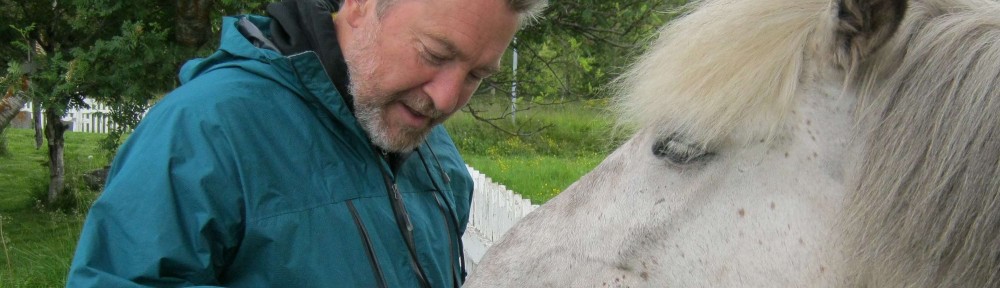
Dorothy Ann Rhenisch
March 10, 1935 – November 23, 2014
Hófstaðirkirkja, Ísland
Seriously. I ask, because there’s this: How Food Replaced Art As High Culture. Don’t be fooled. In its musings, that article from the New York Times doesn’t give the explanation it suggests that it might, but it does say this:
But food, for all that, is not art. Both begin by addressing the senses, but that is where food stops. It is not narrative or representational, does not organize and express emotion. An apple is not a story, even if we can tell a story about it. A curry is not an idea, even if its creation is the result of one. Meals can evoke emotions, but only very roughly and generally, and only within a very limited range — comfort, delight, perhaps nostalgia, but not anger, say, or sorrow, or a thousand other things. Food is highly developed as a system of sensations, extremely crude as a system of symbols. Proust on the madeleine is art; the madeleine itself is not art.
You can be forgiven if you are confused by this point, or if you sense that the article is a wee bit patronizing, because it is. Here, I’ve boiled it down for easier understanding:

The Red Herring Within the Text
In a culture based upon advertising, partisan debate and rhetoric, expect fish.
Yes, everything in the article is true about food. Food really isn’t art, as least as the article presumes it is. That’s not the question, yet here’s how the article puts it, with its unstated assumptions:

Art, as WILLIAM DERESIEWICZ sees it. Food as he doesn’t.
Art is story, idea, symbol, and evoker of emotions. Food is food and a sensory pleasure. That’s what the man says.
Can he really have it both ways? Can he reserve all these categories of thought for art and none for food? So far, classified within the thingamajig he calls art, Deresiewicz has fiction, philosophy, mathematics, and emotional doodad. I promise, tens of thousands of artists, writers and thinkers across the world would be happy to refute every one of those points. And that’s not even getting to the poets, who seem to be strangely left out of Deresiewicz’s universe. In fact, any broad collection of happy thinkers and cognitive and cultural workers would dismantle Deresiewicz’s thesis in endless profusion. And would still be a red herring. The question would be better put as this:

The Real Question
Now we’re getting somewhere. Take a pear. It has a history. It has colour, to which people respond. It has nuances of flavour and shape. Has a context and provides a context. It has social, political and ethical connections. It provides personal and cultural meaning. It must be cultivated, can be produced industrially yet tastes far better and does better social work if produced artistically. It does the soul good. It is alive. Those aren’t art, exactly, but they’re parallel to it, which means that, yes, they’re art, just for a different class of people, within a different intellectual, social, and aesthetic context.

Horticultural Watercolour of a Vicar of Winkfield Pear
When illustrations such as this were made a century ago, watercolour painting was not considered art. It was considered a technique for the accurate rendering of colour and shape in medical, botanical, zoological and agricultural specimens.
Artists moved on, and showed how watercolour technique could develop a rich language of textures and gestures. When it did, it was accepted as art, although one could point out that it was art before that as well. The pear, on the other hand, was industrialized. That was a cultural choice, not something inherent in pears. Pears today, remain as that cultural choice. Anything we do with pears is in dialogue with such cultural choices. And not just pears…
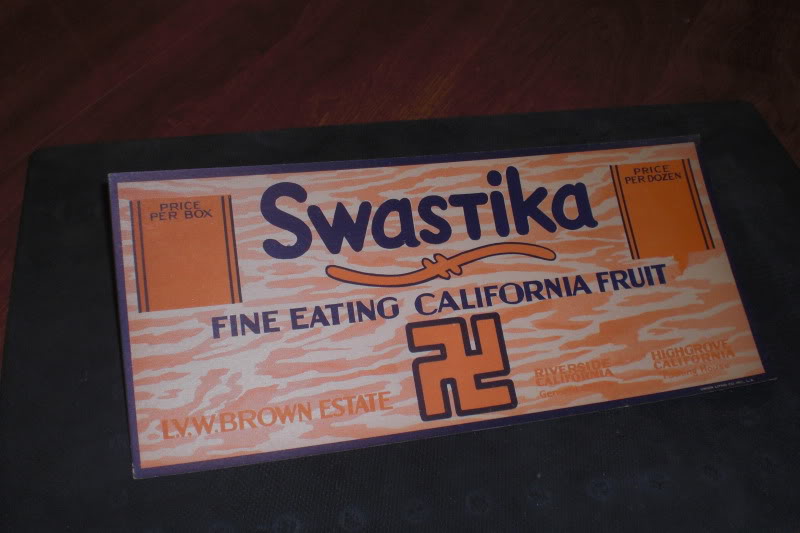
1930s California Orange Crate Label
A century before the art and illustration within horticultural paintings parted cultural ways, pears and art had not been separated from each other yet. The planting of pear trees and the growing of pears was considered high art indeed. It was all craft, which included the crafts of painting china, writing poetry, dance, painting portraits, and growing pears, just to give a few examples. There was a time in which this mattered. Here’s an image from that time. This statue looks out over the botanical garden towards the greenhouses of a baroque remake of a renaissance city residential palace in Fulda, Germany:

Agriculture, Stadtschloss, Fulda
Here is her consort:

Mathematics, Stadtschloss, Fulda
They were a a pair. Through applying the spiritual and intellectual force known as the art of agriculture, in conjunction with applied mathematics, known as land surveying, a prince could run his kingdom, through applied art. The only difference between that and Deresiewicz’s conception of art as a high craft is that the focus has moved from the leading of kingdoms through the integration of all sensibilities in the court (and especially in the body of the prince) to the administration of constitutional democracies through the development of those characteristics within all individual citizens. It’s not the prince who develops thought through balances between various emotional pressures in Deresiewicz’s world, but everybody. It’s not the balanced administration (hopefully) of a kingdom that is the goal, but the balanced development (hopefully) of individuals, who can then contribute their deeply developed energies to a common pool of energy. The conclusion Deresiewicz might have drawn is that these people, given an art that granted privileged status to universal feelings of social and political connectivity through narratives of the individual and his or her emotions, have now accepted that, and have moved into it. The circle is complete. No, the new food culture that is the result is not ‘art’, as Deresiewicz defines it, but it does what art does, for a new people, looking for an expanded sense of ethics able to more accurately reflect the complex interconnectivity between citizens. And why not, when the kind of connectivity that comes out of Deresiewicz’s art world leads to manipulative discussions, such as Deresiewicz’s own? Here’s an image of what I mean:
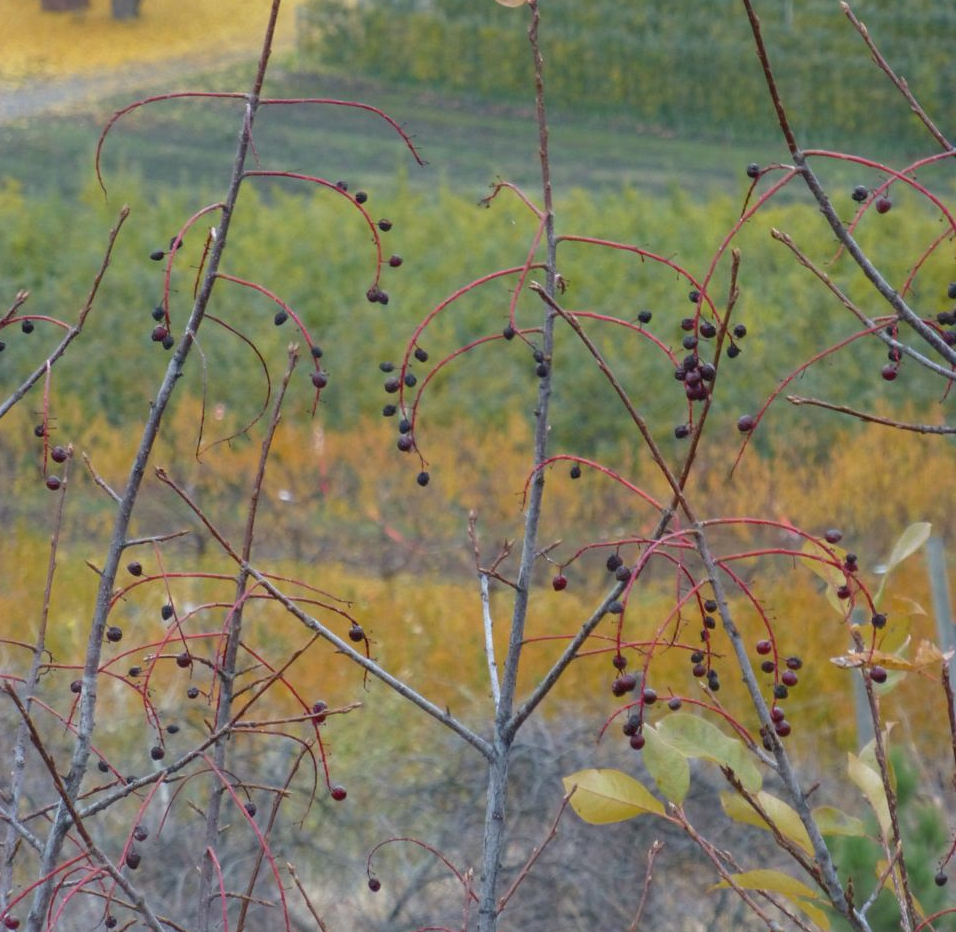
Wild Cherries Left on the Branch …
…against a backdrop of colonial era orchards. Early November. Okanagan Landing, BC
The fact that pears, or apples, or peaches are even grown is very much a series of cultural choices, which meant that other cultures, such as, in the image above, the Sylix plateau culture, were suppressed in order to grant it ascendancy. It’s all politics. It’s all ethics. It’s all art or the suppression of it. As the East German dissident writer Stefan Schütz said, after being stripped of citizenship and booted out to the West (in paraphrase), I will look for creative energy wherever I find it, even among the criminal classes, if that’s where it is, because it is invaluable and I’ve seen too often what is there when it isn’t. He meant, even among the political elites. He meant, even in the sanctioned artistic classes.

Public Art Installation (Electrical Power Box) Okanagan Landing
This is what official, public art looks like when politics and art have been divorced. That the people are asking for them to be reunited in the context of food is a good thing. Let’s run with it. The confluence of energies produced a whole world once, the world we’ve been living in for a couple centuries. We can do it again. Art’s not dead. It’s just gathering its breath for a new flowering.
Why not join the conversation? I’ve been exploring these ideas for over a year now, in my blog Okanagan Okanogan. For a summary of the story so far, click on the .pdf file at the bottom of this page.
A few weeks back I came across a stunning piece of music. Little did I know it would take me into a poem I’ve been travelling towards for a long time. Here’s the music that first enchanted me. It’s in Norwegian, but it is beautiful in any language.
Then next step in this journey was this post in Sigrun’s Norwegian Blog about nature, reading, writing, and home: Sub Rosa. I was quite taken by the wooden nature of the translations (done by prominent 70s-era poets), and asked if there might be an audio version. Sigrun generously replied, with this post, which contains some evocative imagery, and this reading, by the poet Olav H Hauge:
And what do you know, that’s the poem that Sinikka Langeland was playing and singing, that first enchanted me! That got me to thinking further, and with the help of YouTube, I quickly found a stronger reading by Hauge, although not of Det er den Daumen. Here it is:
In this reading, I got a feeling for this man’s work in poetry: wit, coupled with colloquial changes of rhythm, and great brevity. When I listened to Det er den Daumen again, I heard complex rhythms in his final sentence, which matched his thought but which the English translations just steamrolled right over. So, I offer here, as a part of a process of unfolding thinking, this version (it’s not a translation) of Det er den Daumen, which steps out of the hybrid modern vocabulary and simplified grammar of late twentieth century English into a more complex syntax, married with English poetry’s roots in spell craft and English’s Old Norse and Anglo Saxon vocabularies for the physical and spiritual world. I post it here for Sigrun, with my thanks. I don’t know if I did the poem any justice, but I think some music and wit found me in that last line, and that’s at least something:
It is the Dream

And so my journey north, into the heart, continues. You can download an mp3 reading of a slightly earlier version of this poem here.
Within our oldest memories, we come home as the salmon, and come home to the salmon coming home as our newest memories.
 Okanagan River near Gallagher Lake
As the Ancestors watch.
In some countries, it’s the other way around, but in Iceland it’s the mountains that are on the move. The sea is absolutely still.

Of course, on other days it breaks over the rocks with a vengeance, trying to wash the island away. So far, it has failed, but the sacred dance continues. I have brought it home. I left Canada, convinced that it was no longer possible to write a memoir using the character “I”. I return with the literature of the earth, and with these trolls and ogres, dwarves and elves. More on that in the days to come.
The Origins of Art?
I have spoken many times about seeing faces in the rocks. It fascinates me. One of my current projects is an illustrated journey through the human faces in rocks from British Columbia’s Thompson Gorge, the Broughton Archipelago on the Mid-BC Coast, the northern tip of Vancouver Island, the Black Forest, the Okanagan Valley, the Columbia Basin, the Nazko, and Iceland. Here are some pictures from the European part of this project.
First, the possibly Celtic formation at Siebenfelsen above Yach (pronounce Eich) in the Black Forest. Here’s the skull at the base of the phallus:

Yes, there’s a vagina right next door. Yes, it’s giving birth. Yes, there’s a navel farther up the hill, with a wild boar. Take a look at what’s below the phallus/vagina tumulus, though:
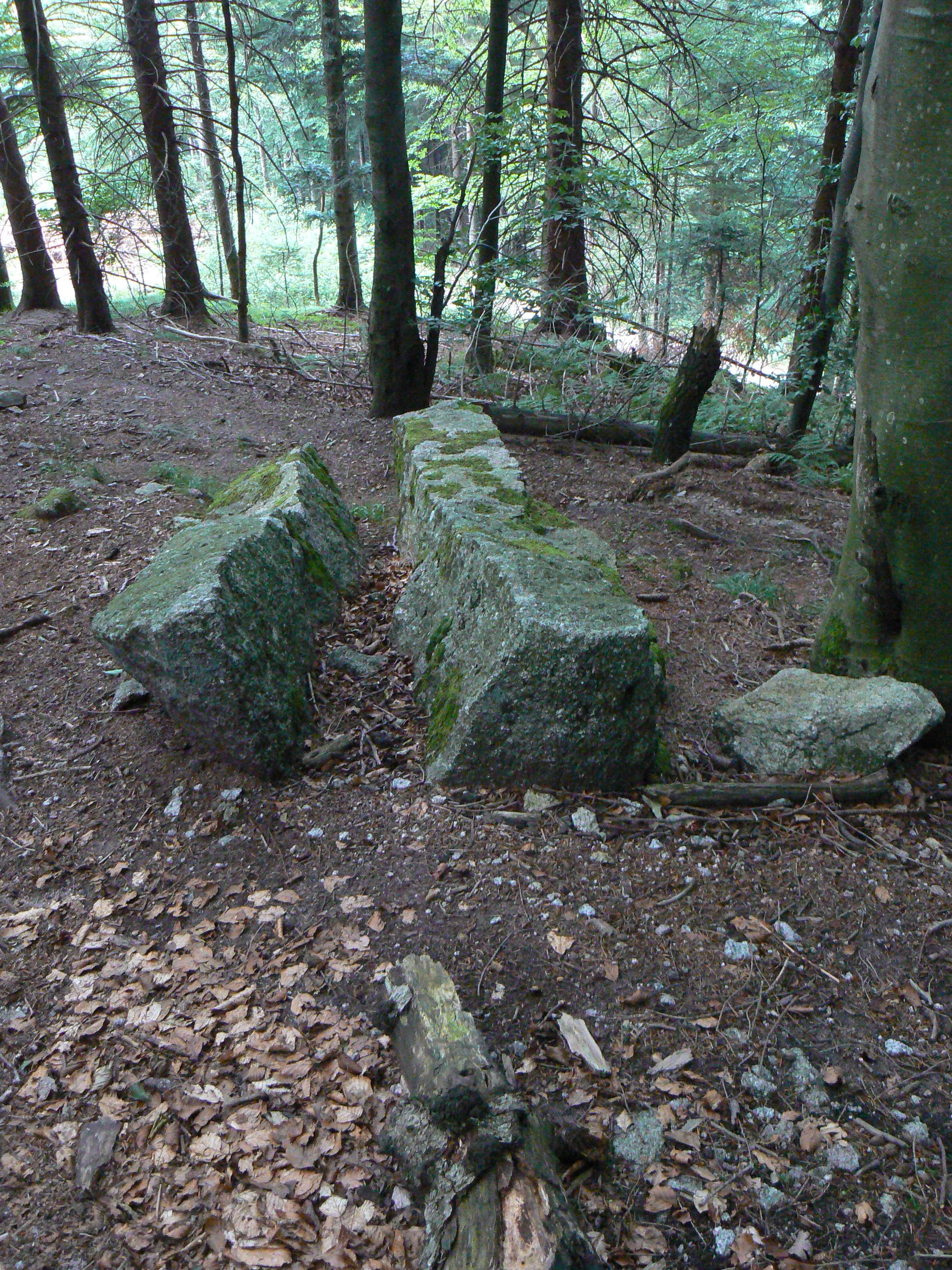
That’s how it was done. Chips were taken out of the stone along a line. Then the stones were split. The hillside below the monument is littered with humanly-altered rocks like this. Presumably, the monument was carved, much like a Canadian Inukshuk. Now, take a look at this:

Crikes. What is that, anyway? A bear? A dog? A lion? I snapped this shot as I was leaving. A big storm was pouring over the hill. I only noticed the head when I got the picture home to Canada. The site also boasts serpents and horses.
But it wasn’t just the Celts. Let’s go to Iceland. First a troll in a cliff. The cliffs here (and in many other places) contain a lot of Troll faces. This is not the strongest, but it’s cool because it has a little hand-made troll on his head. It seems that humans can’t avoid making self portraits.
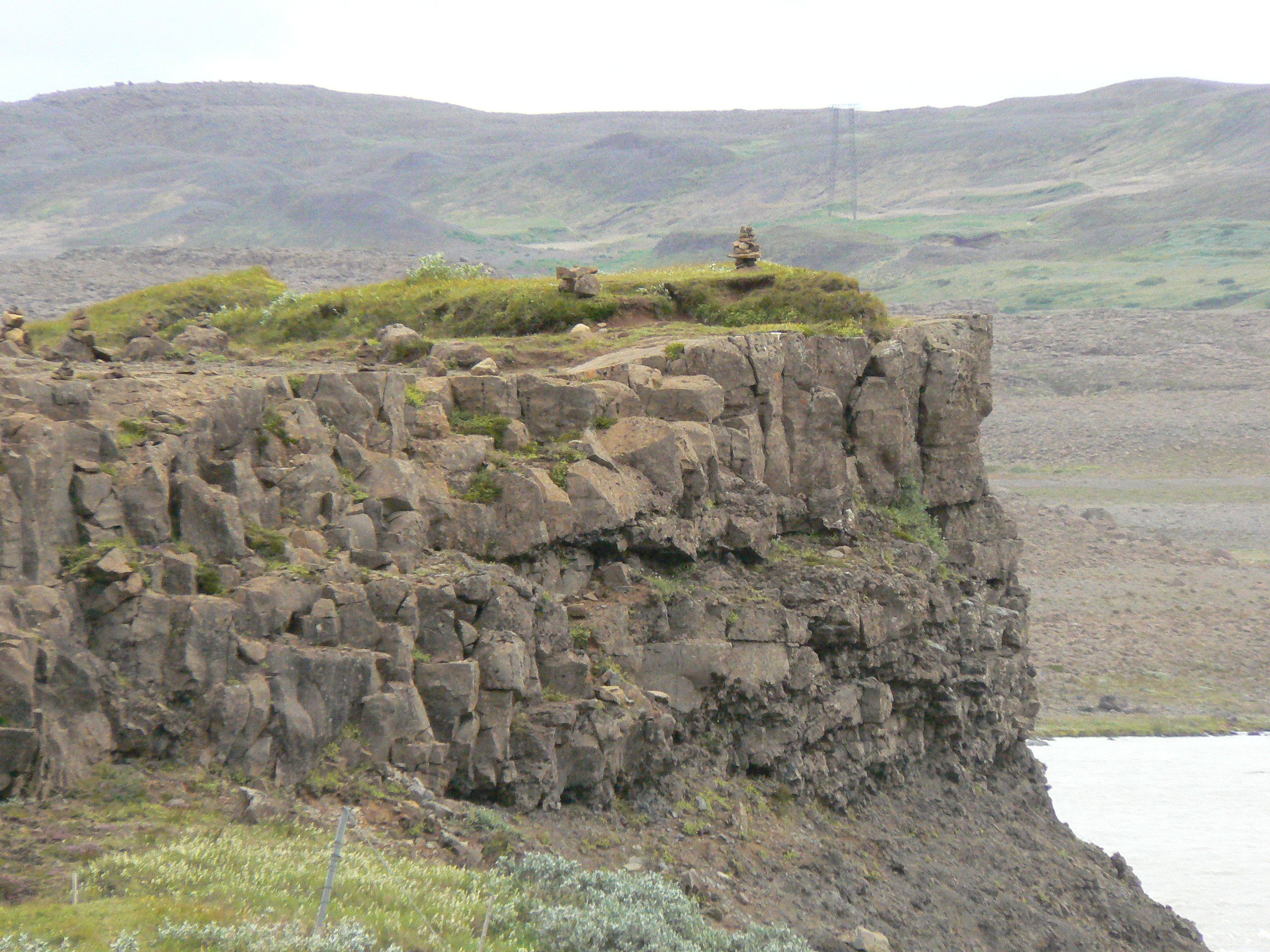
And here we are closer, just a hundred metres from the cliff edge:
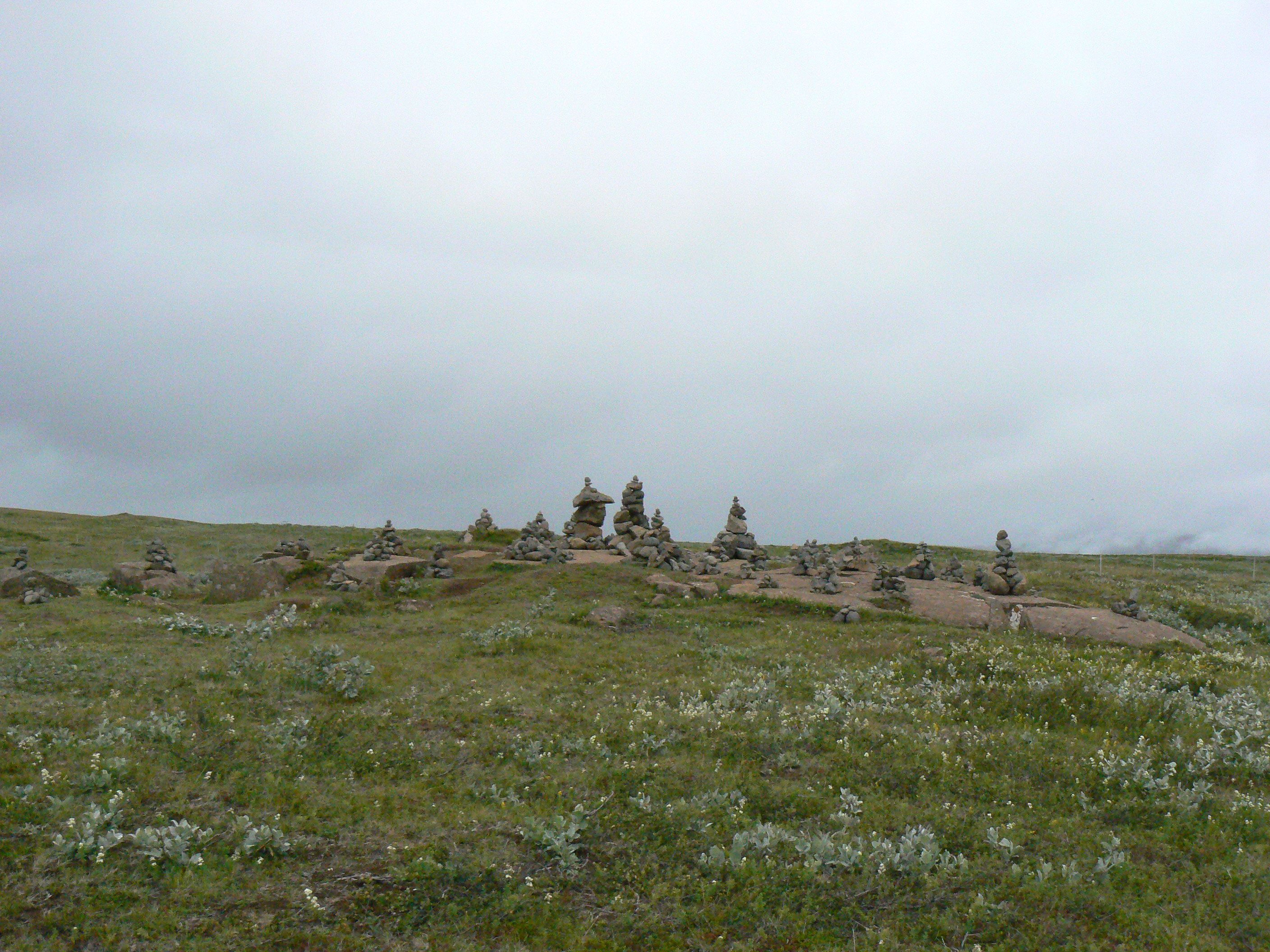
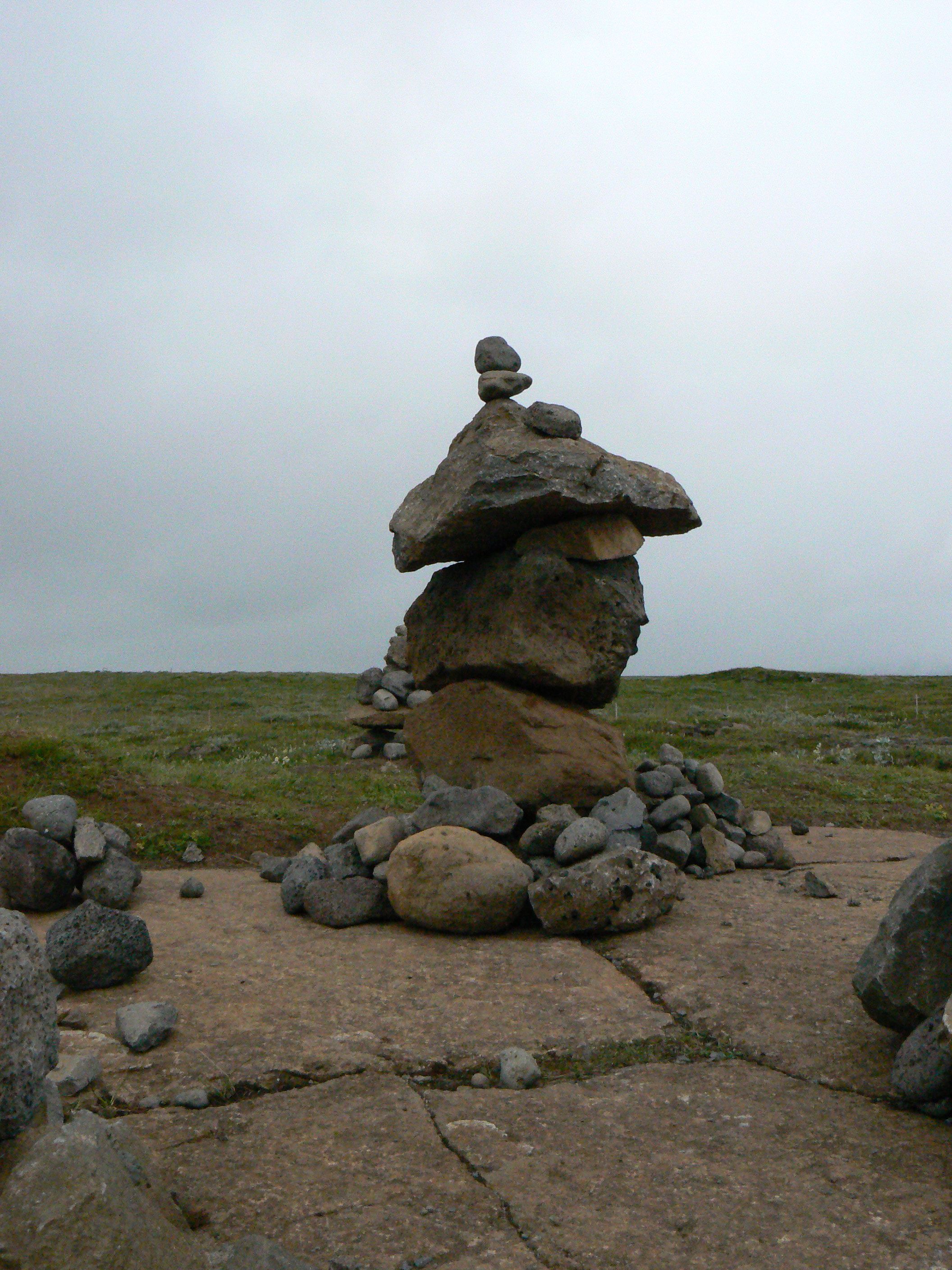
See what I mean? Closer yet:
But don’t think it’s all about getting cozy with the trolls. Here we are at the geysir Geysir at Geysir. Well, actually, just uphill. Warning: that red dirt sticks to your boots and you will spend a half hour scraping it out with a stick and hopping around in mud puddles. Good to know.
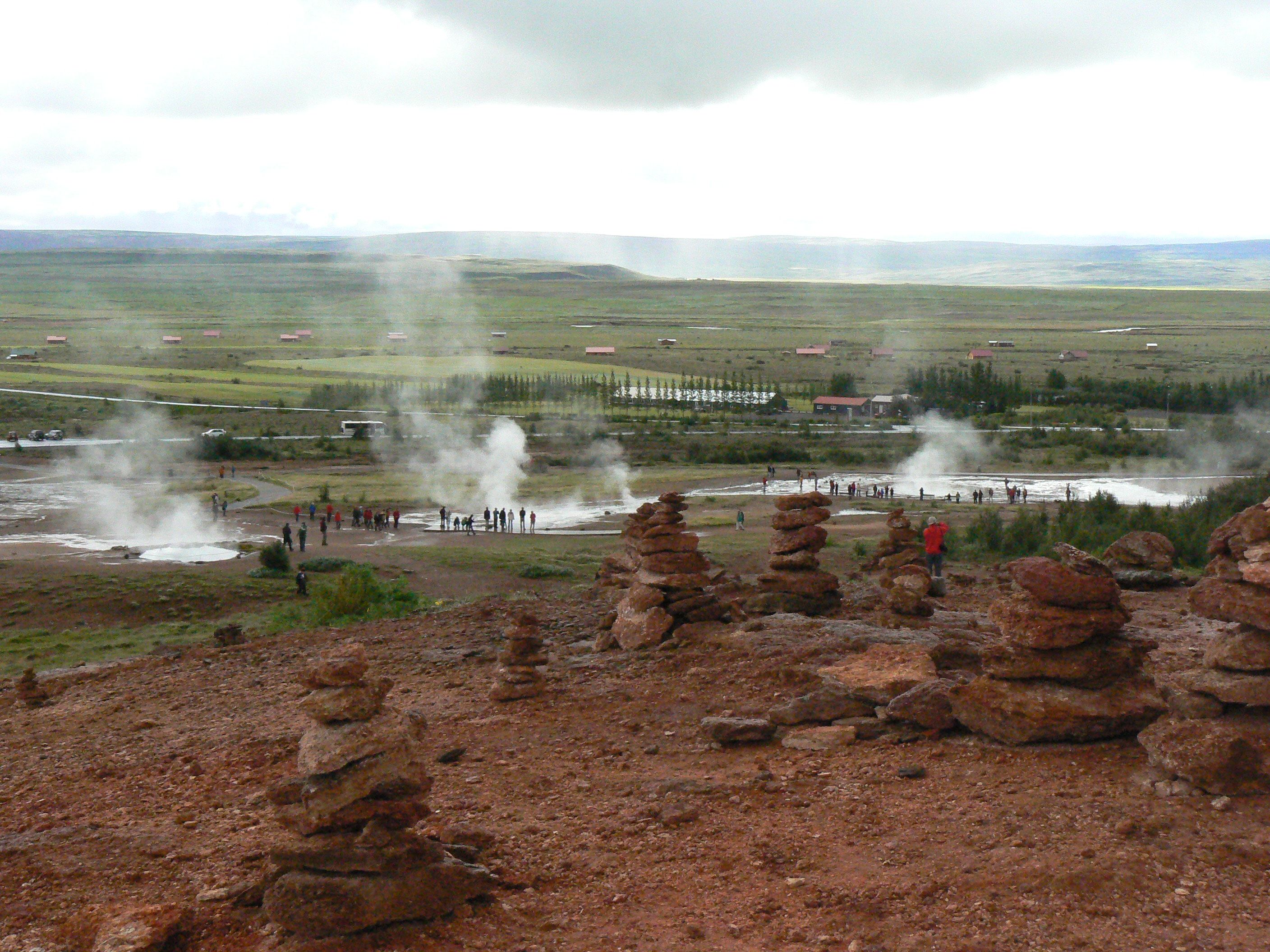
It’s enough to make one feel like one is being watched. A little closer:
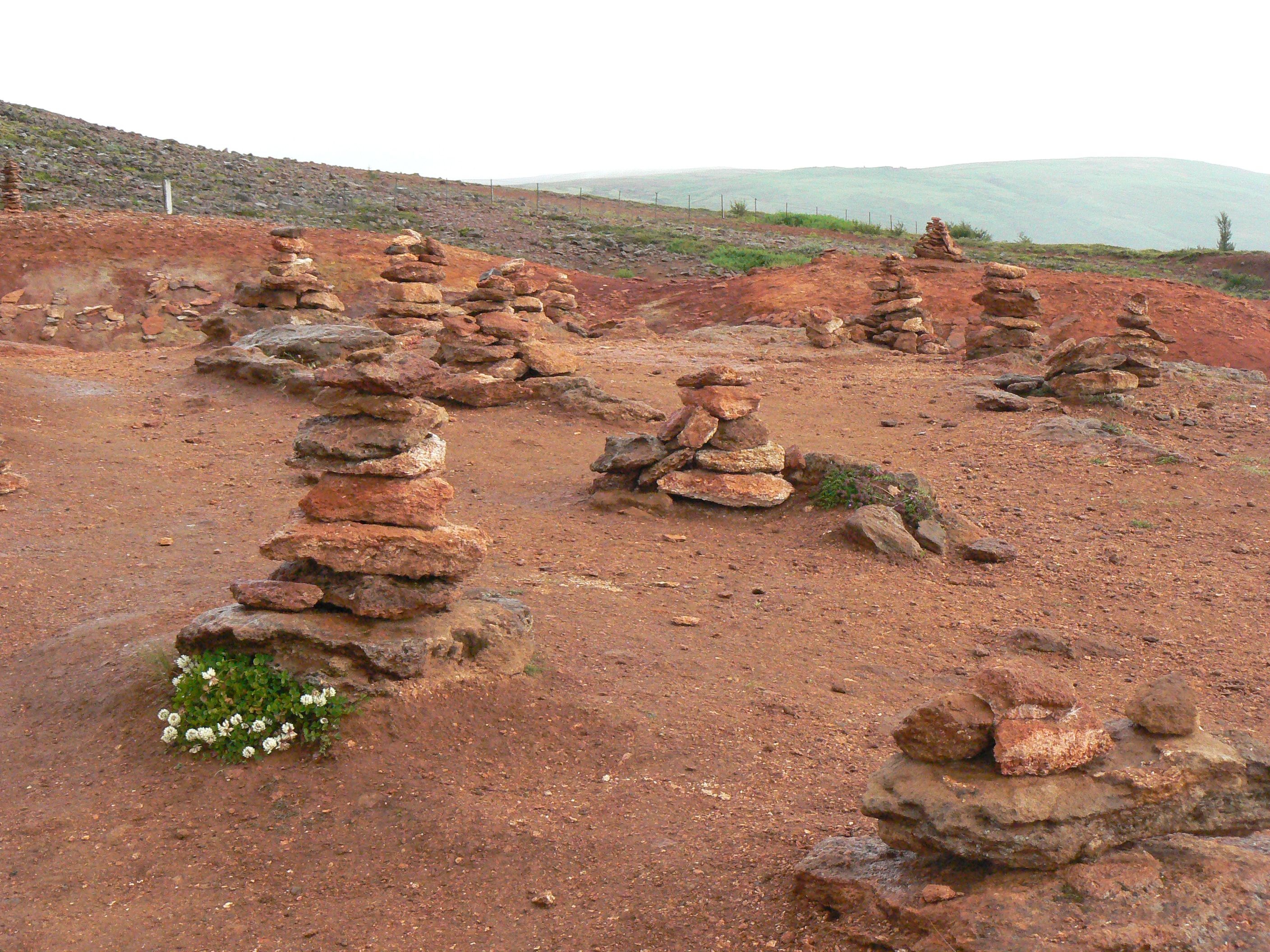
Did art start like this? If so, I think it’s watching us. Virtual reality didn’t start with computers or SFX laboratories, at any rate. Aren’t humans beautiful and curious mammals? A dozen rocks on top of each other, and there you have it. You.
It’s magic.
Two years ago I crossed the iron curtain from west to east, on the old Salt Road. Two weeks ago I crossed back. The political spray paint art has been painted over now, and the concrete border posts have been taken away and, no doubt, smashed up into road gravel. For an hour I wandered in the sun and the grass with the birds and the grasshopper nymphs, marveling that all that division led, in the end, only to what had been there before it began. I ate wild cherries from a tree growing along the East German guard path, and left the last tiny chunks of concrete to the ants, who were getting a bit of heat from them. For a souvenir, I bring you this found moment: two kinds of East German energy — old and new.
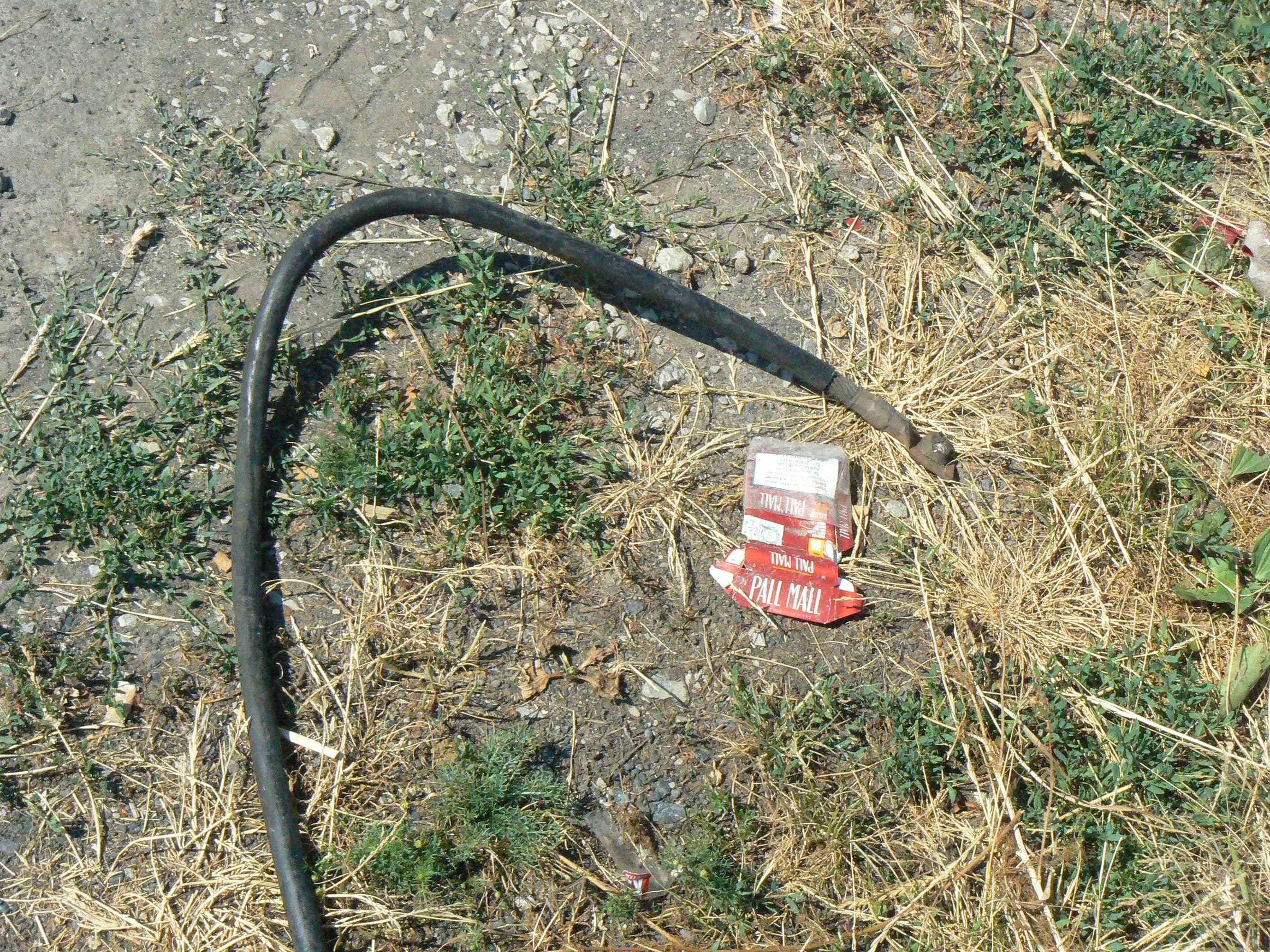
East Meets West at Point Alpha
And this time I found my way home. I have become a Trabant, with an Ossie in my head with both hands on the wheel, and the car puffing blue smoke like, well, not like Brecht’s cigar maybe, but at least like a Pall Mall, eh.
Puff.
I feel like John Le Carré.
Well, the question is floating around lately … would it, could it, might it, should it, will it be possible to buy up a whole bunch of old cigarette vending machines and convert them to selling small, specially printed books? Why, of course, but, first, maybe, they have to be lung-safe. To add to the discussion (it really is floating around, I promise), here are some pictures from Gotha, Germany, which I took today. First, the full meal deal …
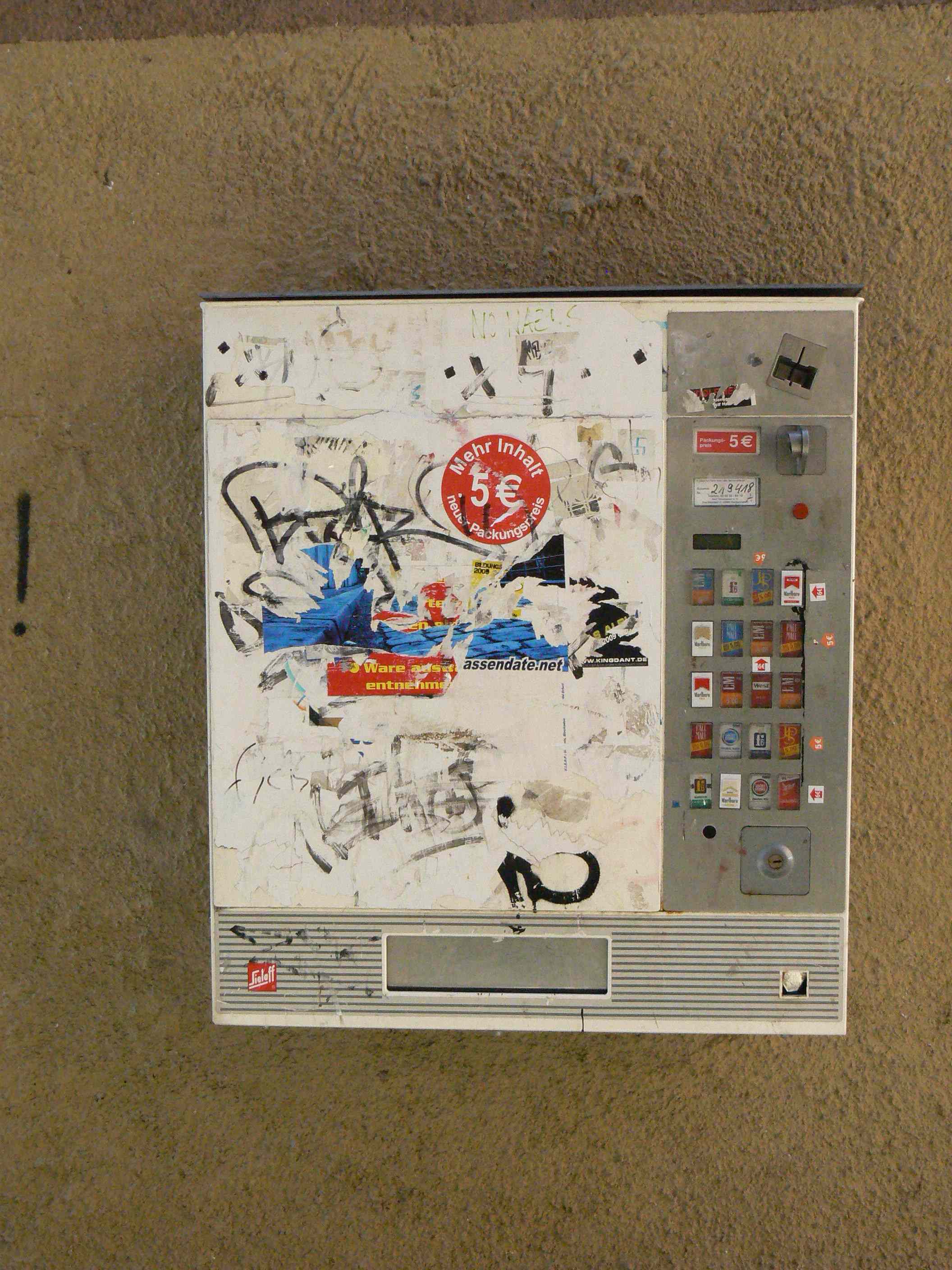
Cigarette Machine Next to the old Waid Hall in Gotha.
Ok, that Waid thing might be tough. In English, it’s Woad. It is what made the world turn around before the British East India Company brought Indigo back from India. Until then, you made the colour blue from this plant, that was fermented, for months, in urine. The law was: keep your windows shut on Sundays, for God’s sake. Looks, pretty good, though. Nice and artsy. All those stickers are illegal bits of Neo-nazi and anti-Nazi art. The way to deal with them is to tear them off. Here is one so enigmatic that no one bothered:

Politics, German Style
Well, OK, maybe that’s not the kind of books that the writers of Canada have in mind. Something like this maybe?
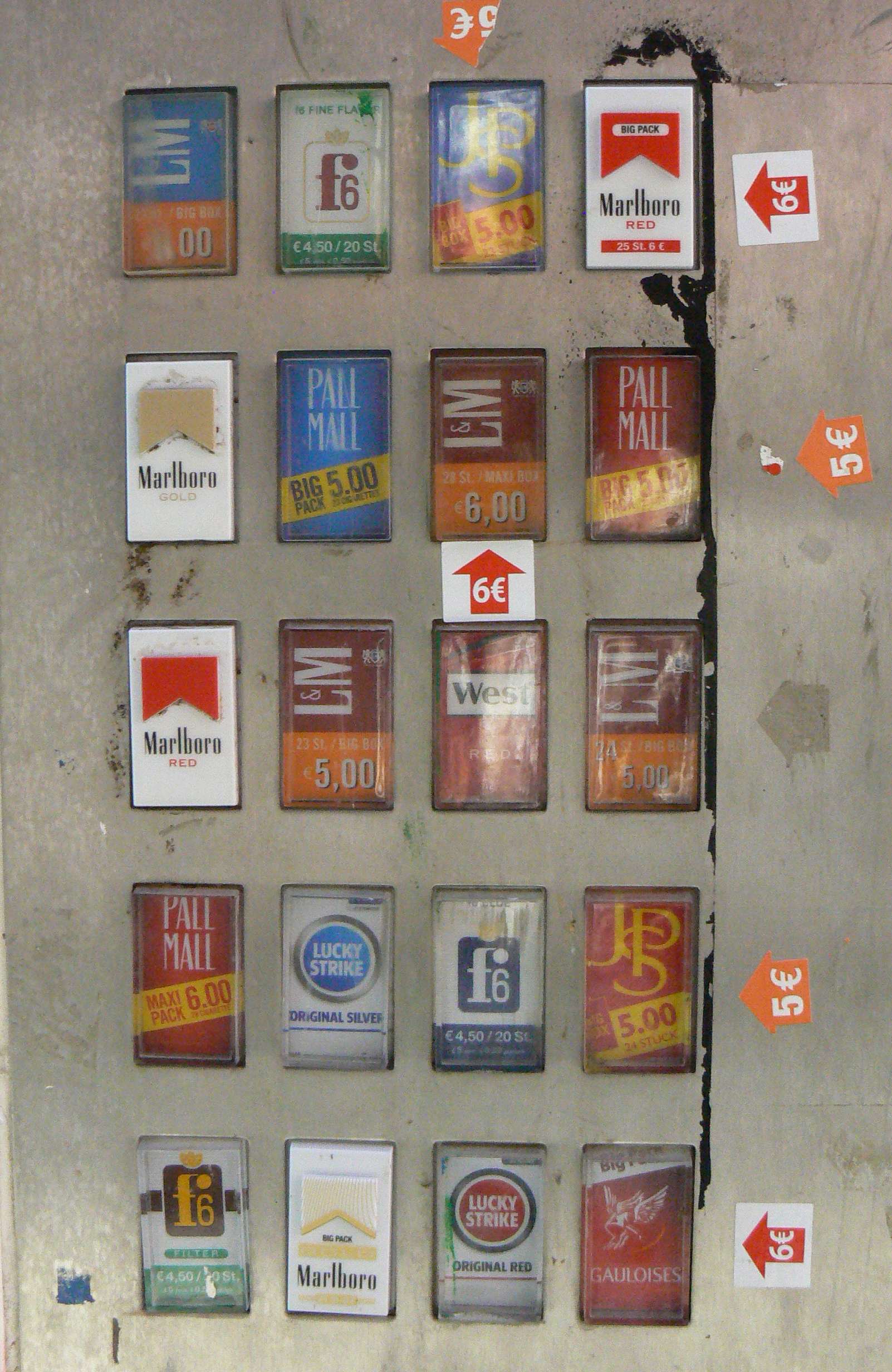
Picture Your Book Here!
Obviously, some books would be better able to compete than others. I pity the poor writer who got stuck in next to the Marlboros. I mean, sheesh. Even Margaret Atwood can’t out-brand Marlboros. Well, the deal is that these machines are everywhere, in the smallest village and the biggest city. In the villages they aren’t adorned with illegal publications, but in the communist-era housing settlement (that replaced over half of the old town) of Gotha, they look like this:

The Cigarettes on the Other Side of Town
Yeah, a bit of genuine graffitti there. You can bet it’s old. The Germans have so moved on from that. But cigarettes? As the playwright Stefan Schütz said to me: “What do they want to do? Take the last pleasure away from the proletariat?” Ditto for, I think books. But don’t let the cigarette machines have the last word. Don’t let them just simply say: a book is not a book until you can smoke it, right?
Let’s see what the German post office has to say about the matter. Again, in Gotha (we’re talking about the royal city here, after all)….
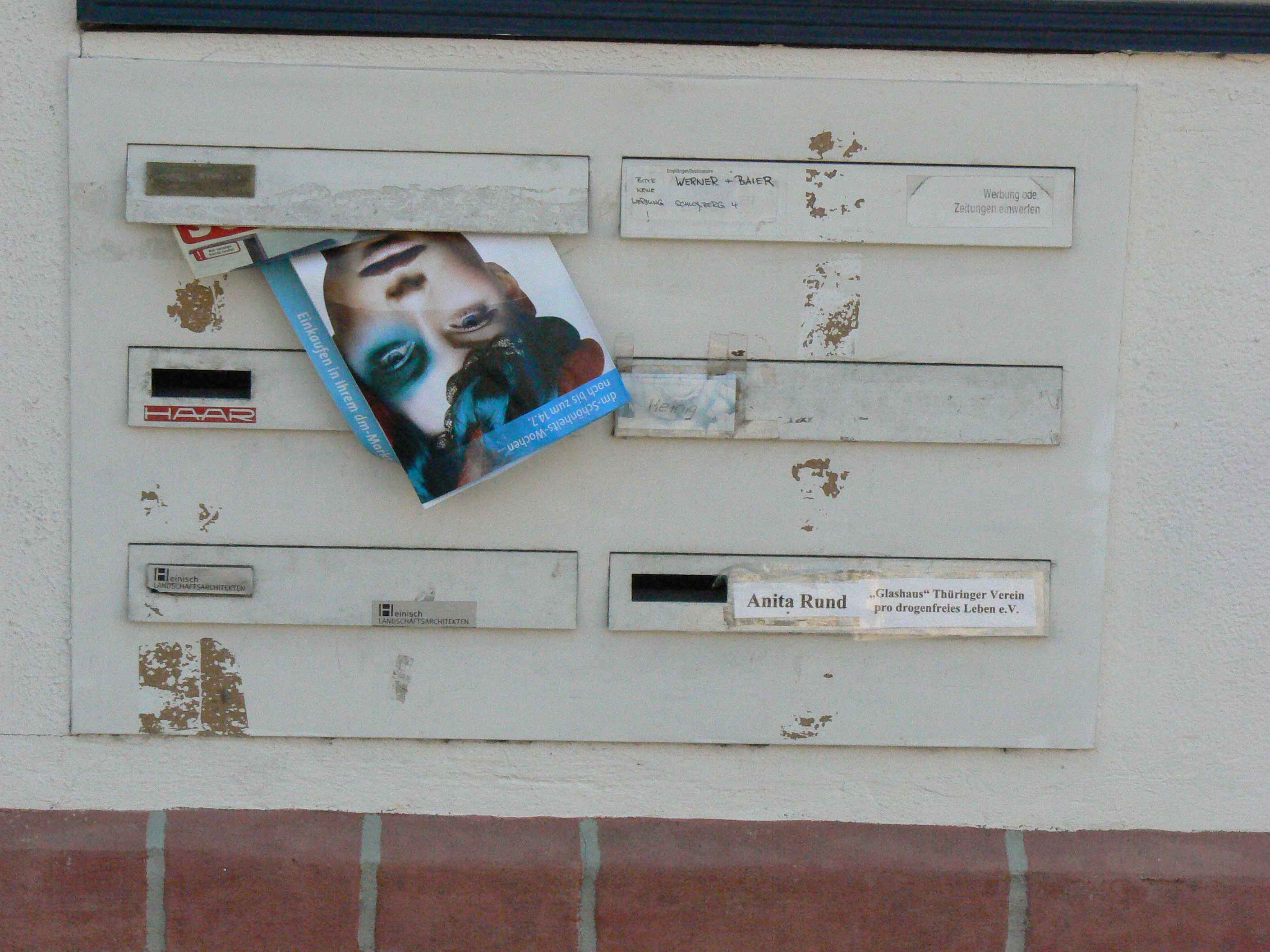
Unwanted Mail at a Hair Salon in Gotha
You can, it seems, lead a German hair-salonist to the mailbox, but you can’t make her read. Her neighbour, by the way, is The Glass House, the State Association for Living Drug-Free.
I think there’s lots of potential for this cigarette machine idea…as long as we glue the books on in the middle of the night, so our readers can tear them off before dawn.
And with that, good-night (I bow). Tomorrow I go to the most beautiful church in the world, the round church of St. Michael in Fulda.
Sorry, the monks are pretty clear: no pics.
Smart monks.
I think you could safely say they aren’t smoking their books.

Napoleon Singing His Heart Out
Perched on the marker stone commemorating the 1806 battle that saw Napoleon’s armies slaughter the Prussians and achieve European dominance, a former emperor sings into the morning light, five minutes before a warm summer rain. The marker was erected in 1990. Until then, the place was a tank practice ground for the Russian army. Everybody, it seems, got to practice being Napoleon, just a little bit. Nobody, it seems, gets to keep the place for long.
Meanwhile, down in Jena, the war continues.

The War for Hearts and Minds
On the one side, the symbols of German culture. On the other side, German street culture. Visually at any rate, the official symbols are not winning. In a world of instant and mechanically-reproducible art, art itself becomes a quaint antique. And looking a little closer …

Anti-Nazi Street Art
Downtown in Jena, most political action is fought using small glued-on posters. This one, though, was made using a marker and some bus timetables.
Hard to imagine any art gallery rising to this level of art anymore.
No wonder Napoleon is singing. As they say in Jena,

Indeed.
And down the road I go again.
As part of the work of writing about paradise in the former East Germany, I am back in Europe, looking for traces of Goethe, the mad poet, Napoleon, the mad Emperor, and the paradise they were both chasing, by book, edict, and sword. Today I am in Manchester, and who did I find early this morning wearing the English flag for her beleaguered team, the flag of St George, but the Queen herself, in all her weather- and pigeon-stained glory.
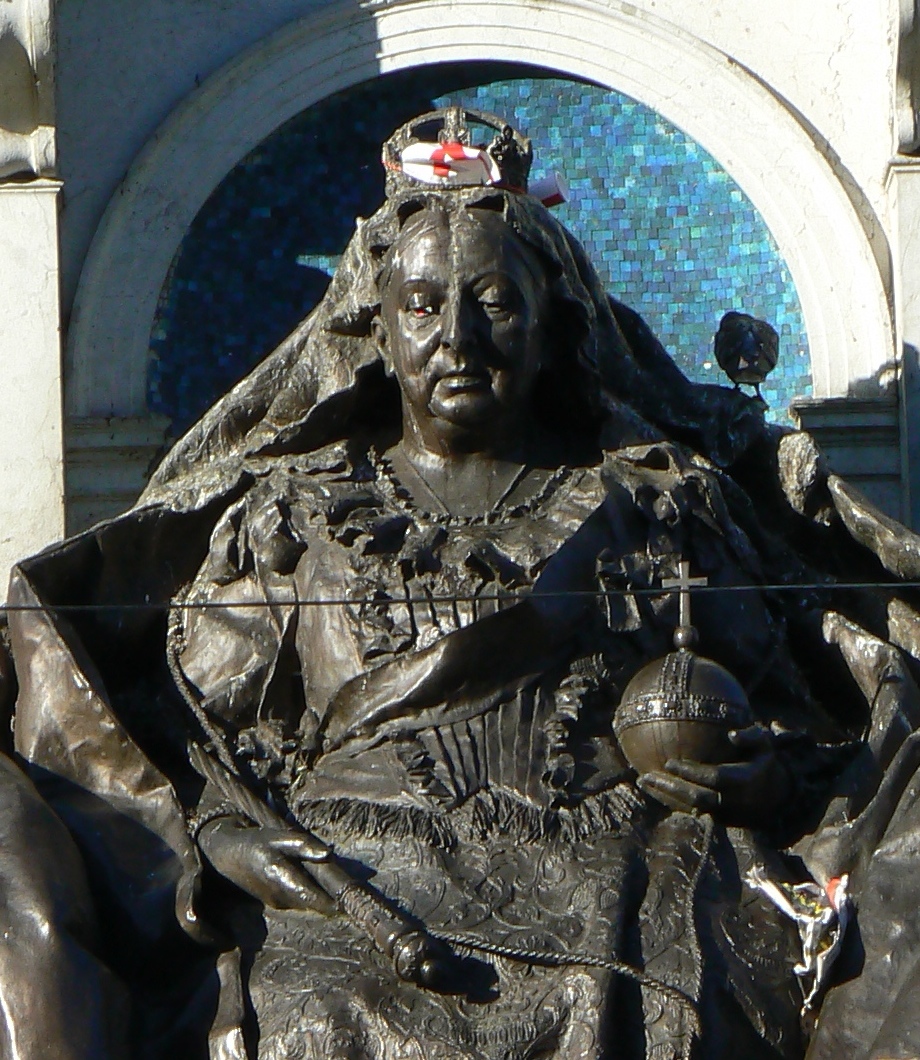
Friday night, I had a beer can up there, too
Should all fans of football be so demure.
 Harold Rhenisch