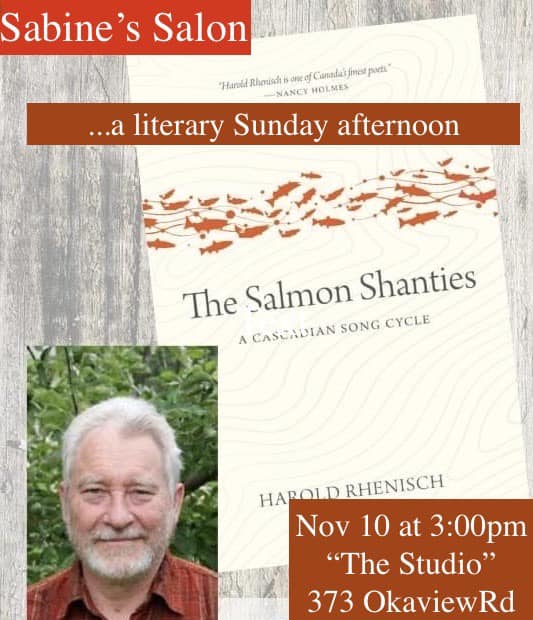
0 to 4:00 pm. on Saturday, January 25, at the Vernon Library, we will celebrate poetry together, and open the floor to an open Mic. Garry is going to read from his newest book The Flesh of Ice. I will be reading from The Salmon Shanties, my new book of the land we share and the paths to reconciliation it offers us. I am really looking forward to the Open Mic. Garry will be offering one-on-one poetry consultations in the morning and early afternoon. I expect we will hear exciting new work from new voices. Here are our books.
Garry and I first read together 31 years ago in 100 Mile House. The next day, we hosted a workshop on myth, which was my invitation to open up poetry into a form that included the land as part of the self. It was a pretty fantastic workshop, with Garry’s Secwepemc perspective and my own explorations from trickster cultures, drama and a life lived close to our land. Now Garry has closed the circle by inviting me to join him. We’ve been trying to read together for several years now. Well, here we are. How great is this!
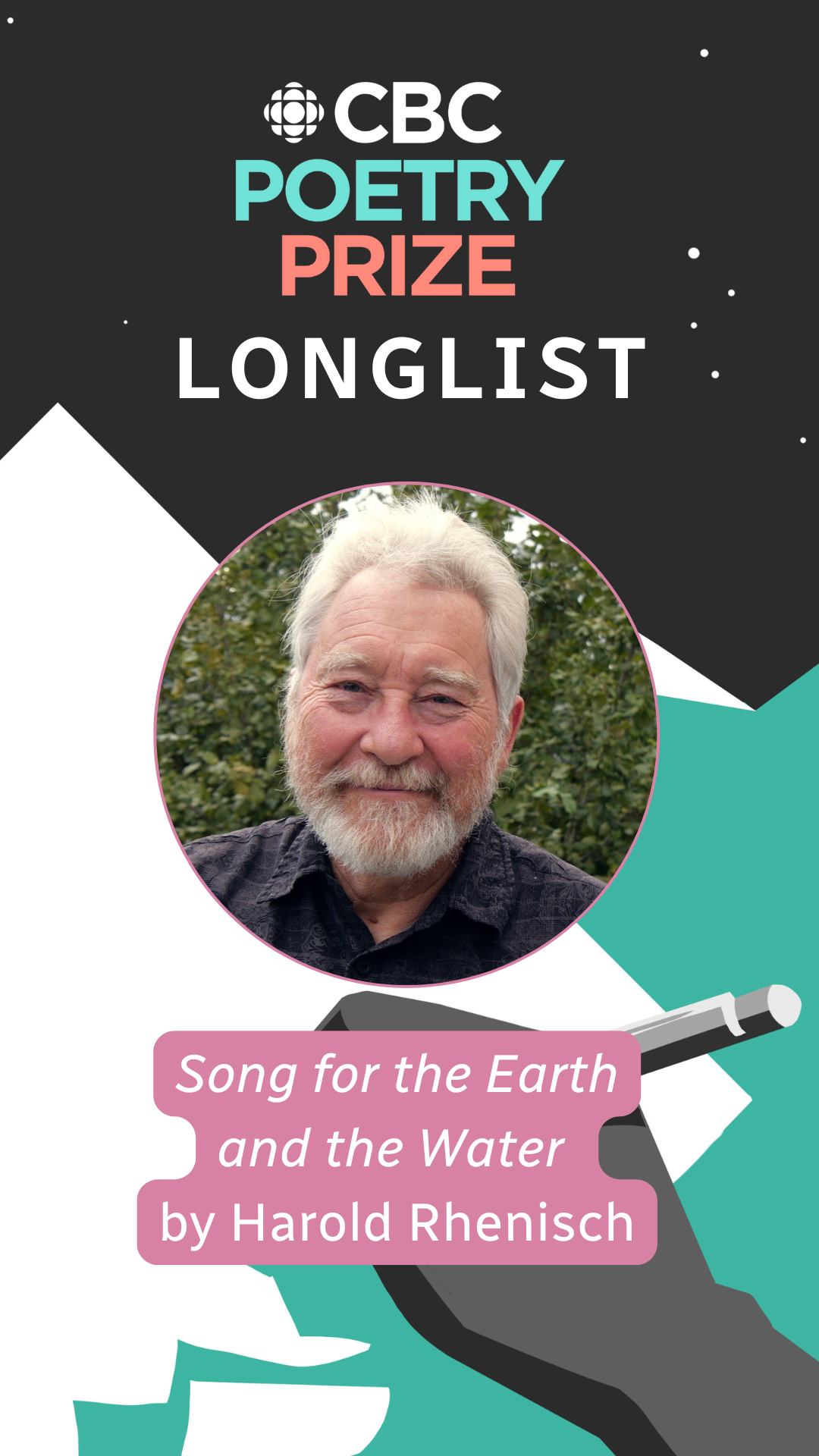
My poems include Sugar Cane Fancy Tanse, a poem written after being moved by the dancers at the Sugarcane Father’s Day Pow-wow twenty some years ago. It won a CBC Poetry Prize in 2005. I will also read from Song for the Land and the Water, which was long-listed for the CBC Poetry Prize this year, and Saying the Names Shanty, which won a CBC poetry prize in 2017.
This is one of the closing poems from my manuscript “We are George Ryga,” proletarian songs about the Okanagan Valley and a whole lot else, as a land of stories and solidarity.
You can read the long list and the CBC’s notes here:
We’ll have a slideshow on Cascadia, and then a reading linking Father Pandosy and Chief Nkwala to the Okanagan today, rooted not in Canadian colonial history but in its real foundation, the Columbia country. To get you started, here’s a little background from okanaganokanogan.com on how the book got going over the last 15 years…
First, the work. New garden boxes built, in time to plant the garlic before winter. You can see it under what used to be the lawn, there, a nice green quilt.
Schedules are set by the Earth. Then some wrestling with fish. They are slippery, and hard to keep between the pages, but it’s good that way.
Now, to cross the mountains. We’re going to talk about haiku, and how the waves breaking on the beaches of the Coast can shape a series of poems.
It’s here! The launch of The Salmon Shanties will be at Pamplemousse Jus Winery in Summerland, at 4 pm on September 19, as part of the Ryga Arts Festival.
See you there at 9819 Lumsden Ave, Summerland. This blog was created to write this book. This reading was created so we could sample some wine made from the land and talk about poetry and its shared terroir with wine here in Cascadia. Here’s what Sharon Thesen says about this book:
“This is an astonishing book. It rips the world open. It takes no prisoners. It upends the entire overlay of globalism that has turned a peach into an industrial product. It is an ecstatic unravelling of the delusions of the present. Rhenisch’s visionary and prophetic voice joins those of the Indigenous Cascadian past to restore, in poetry, the sane and beautiful way of its water-keepers.” —Sharon Thesen
I will be reading selections from the book, along with a show of images, including a loon flying underwater, vineyards growing in shale scree in Germany, a theosophical vineyard in Switzerland, and so much more. Our local terroirs will be set amidst many others in Washington and Oregon, growing on the same soil, from the Wahluke Slope to Rattlesnake Ridge, the Horse Heavens, and the Willamette. All will be rooted in Indigenous land. With any luck, we will get to taste some sumac, if the guys have any of that still in the bottle!
The Pamplemoussers Getting Ready for us!
I hope you can come! This is going to be a very unique event. Even better, if you come to the opening of the Festival at 6 pm on Wednesday, September 18, I will read from the sequel to The Salmon Shanties, We are George Ryga. This is the year that fruit growers in the Okanagan Valley are in crisis as they haven’t been for fifty years, so I will take you back those fifty years, and forty before that, with a vision of moving forward. You’ll have to come and hear the details of just why we are George Ryga and how we can make it all work. There will be a slide show of the United Fruit Growers protest of 1973, when activism changed the Okanagan world forever. Come and meet the BC Fruit Police, and see them and the RCMP meet their match against a convoy of partisans and black marketeers from European wars, and a WWII fighter pilot, too. The opening will be at Summerland’s Ryga Arts Centre at 6 pm. See you there.
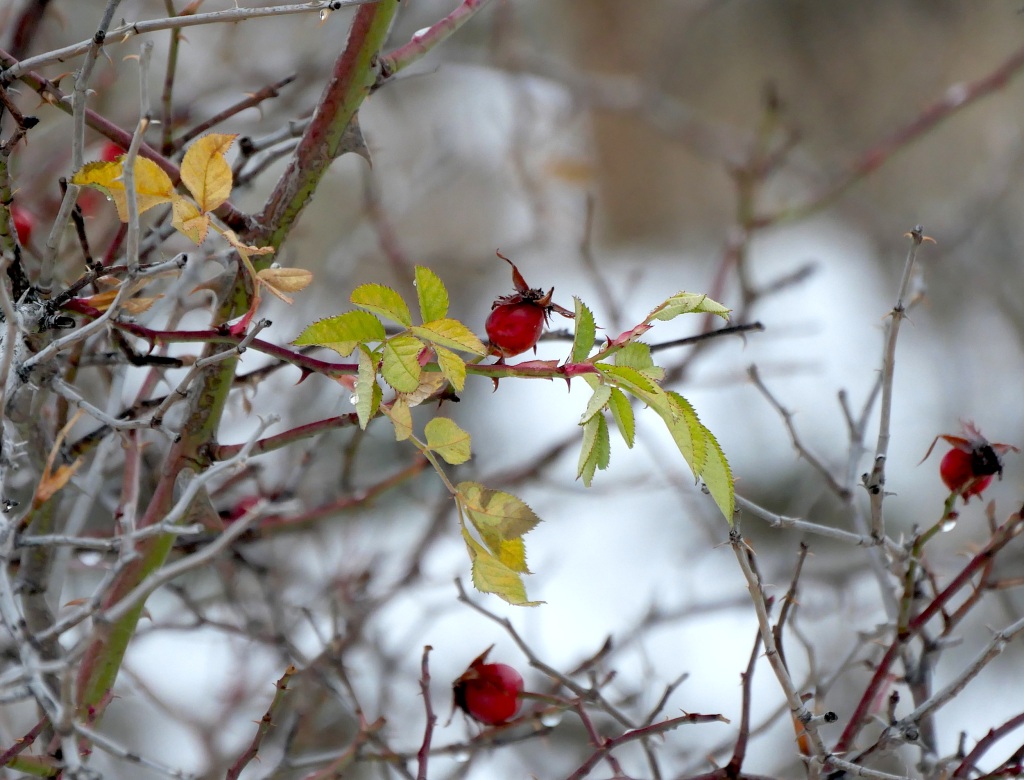
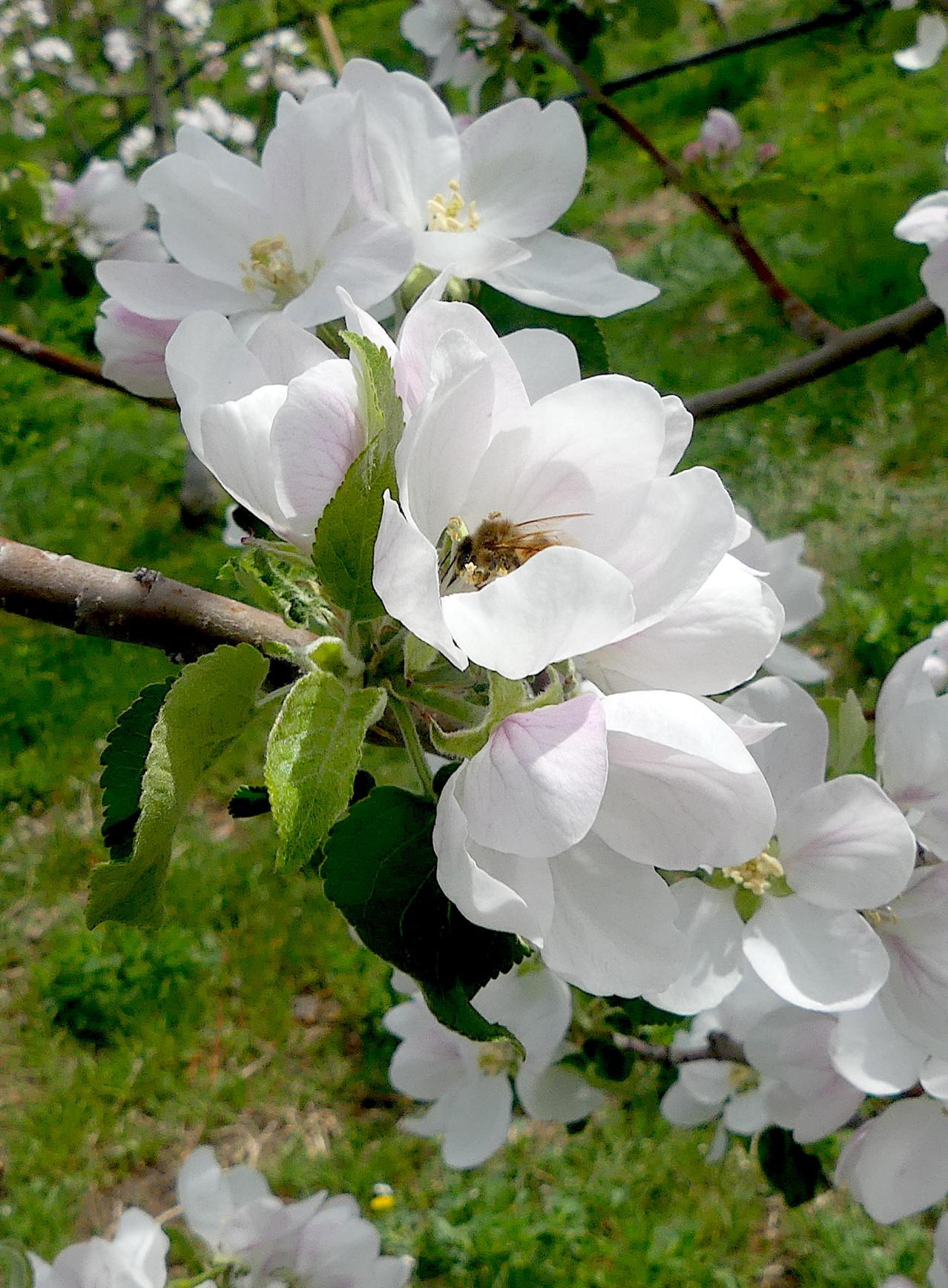
A rose is a twig, a thorn, a leaf, a stem, a seed, seed fluff, bark, root, bud, wood and scent, and now, in early winter, the fruit. This is not, however, a period of fruition. Rather, it is an opening. The opening includes a bird dropping a seed, a seed leaf, a first root and stem and eventually a thorn, and a flower, opening as an invitation, sending its scent across the air to attract a bee or a beetle or a wasp. If a bird didn’t take the answering insect away and the flower was pollinated, the rose answers it back with a seed and the swelling of the stem around the seed. That swelling is the fruit, bright red to call birds out of the midwinter air. It is not that time yet, but in late January, when the fruit is fully ripened by the cold and the warming sun between a new moon and the snows of a full one, a bird will come, eat the fruit and drop the seed, multiplying the opening of the rose. There is no beginning here and no end, only bird and rose calling out and answering together, not with language or intent but with bodies that fit into each other like a leaf into the air. In human terms, that is, in effect, what poetry is, this opening in the world and this opening in the world again. It is not a text.
It is not the following, which is how the Ministry of Education looks on the lives of living things:
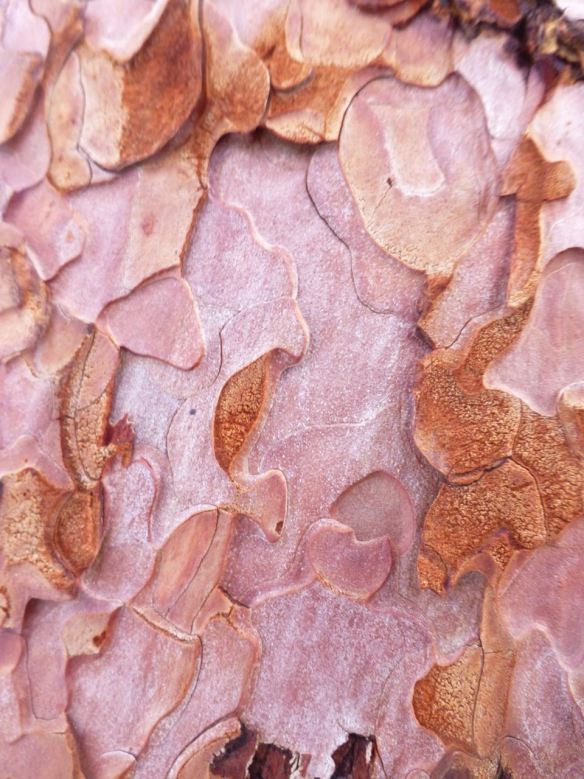
Despite the Ministry’s insistence, texts aren’t primary. The text no more starts a process of opening than does an intent. Communication does not begin with a self, a will or a human wish. The body in the world comes first. I, for one, learned to read the world before I learned to read books, and learned to prune fruit trees before I learned to write poetry. When I came to writing poetry, I treated it as a tree, a living thing I was in partnership with. It is not the usual path, but it is a human path. Here’s an example of the first book I read:
I read them as shapes in the darkness of my body and maps of the world. They are. You can read more about these ponderosa pines (for such are those shapes of bark) here, in Ponderosa Pine’s World, and here, in The Tree at the Heart of a People, and even here, in Humans and Pines are One. You can also read about them in my new book The Tree Whisperer, where this whole story is told and the consequences of the B.C. Ministry of Education’s inability to set its settler culture aside and to inhabit the land and people it lays claim to are explored in depth. This matters. Like a rose, it is blossom, bark, stem, wood, root, branch, bud, seed, fruit, and bee in one, and bears, too, which made the apples for us.
It’s a love story. You don’t tell a lover that your love is a text. For that, you’ll get stung. And apples, by the way, are roses. And, yes, these flowers are in the book, and stories of teaching people to learn to prune these trees by recognizing that these wooden bodies and ours are one, and trusting that knowledge. The book demonstrates how.
It is an opening that has been ongoing for 50,000 years, 10,000 of them including humans. I invite you to set this text aside, which is only an invitation and a record of fifty years of opening and join this ongoing opening at a bookstore near you, or here: https://okanaganokanogan.com/harold-rhenischs-shop/. Touch like this is what we do for ourselves on this Earth. It’s not school.
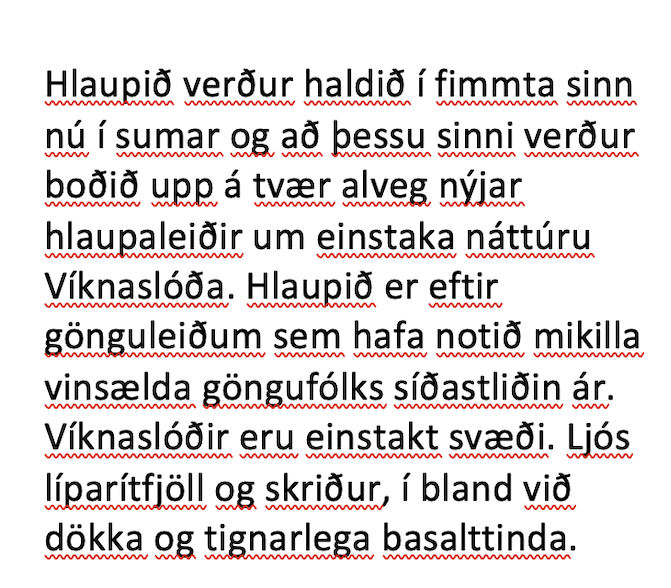
Icelandic is a beautiful language that rolls around in the mouth like pebbles in surf, but it is a little hard to absorb all at once. Let me show you the solution I found in my new book Landings, but first, so you can experience the dislocation of a language at once familiar and strange, here’s some Icelandic, complete with Microsoft’s error warnings:
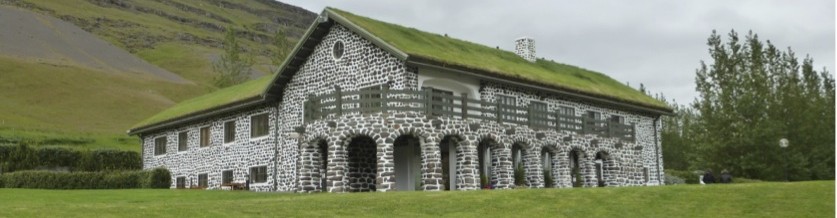
And a photo to go with it, way off in the East Fjords, which is as far from Reykjavík as you can get before you start swimming to Scotland:
So, that’s nice, right?
Here’s the info in that wayward dialect of Icelandic now called English:
Microsoft is still coughing a little out in its Seattle suburb, but you get the drift. But what if you’re doing this up the next fjord, in a little room at the novelist Gunnar Gunnarsson’s house, a kind of stone novel on an old monastery site…
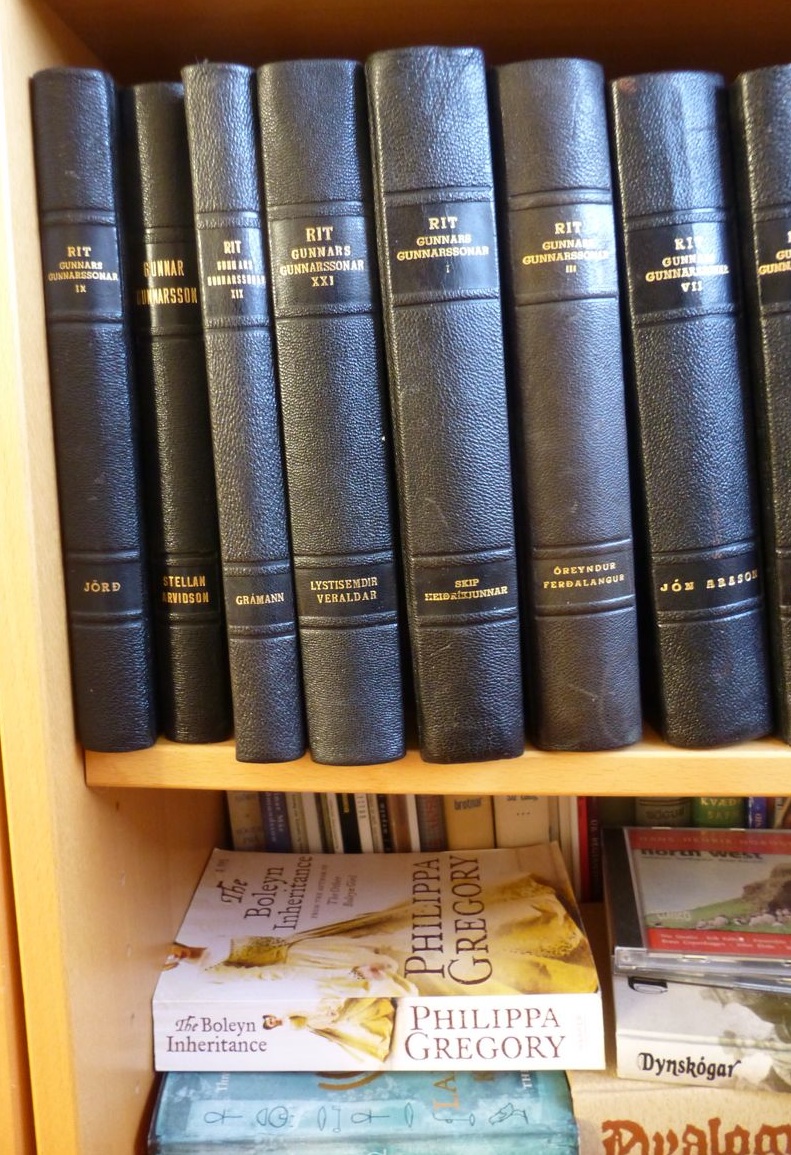
…where you’ve been alone with Icelandic books for weeks…
The Lower Shelf Shows the Abandoned Strategies of Previous Artists in Residence
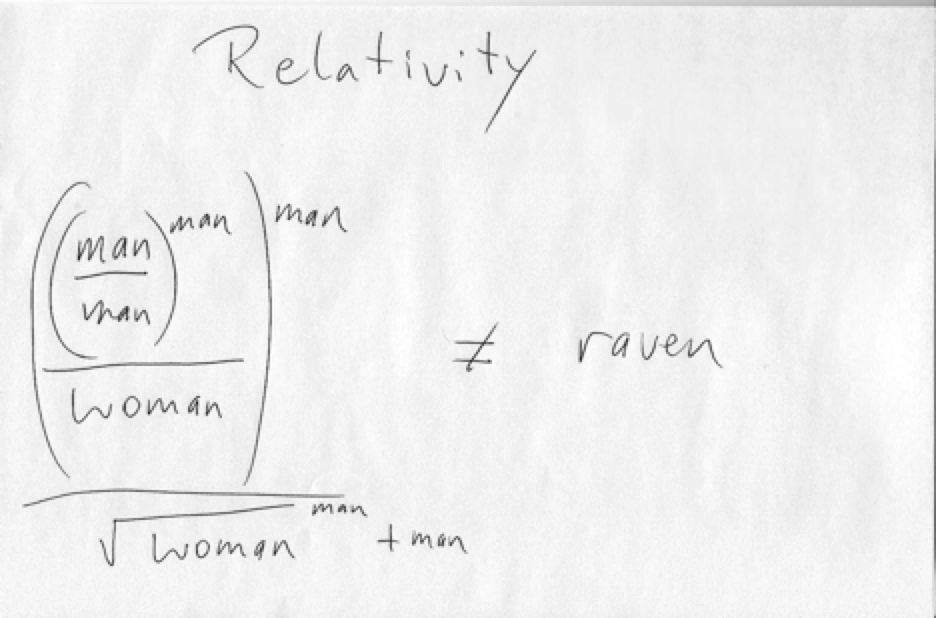
…and have been wind-blown all day? What then? I was just too tired for words in any language, so I tried mathematics instead, on the principle that math is music:
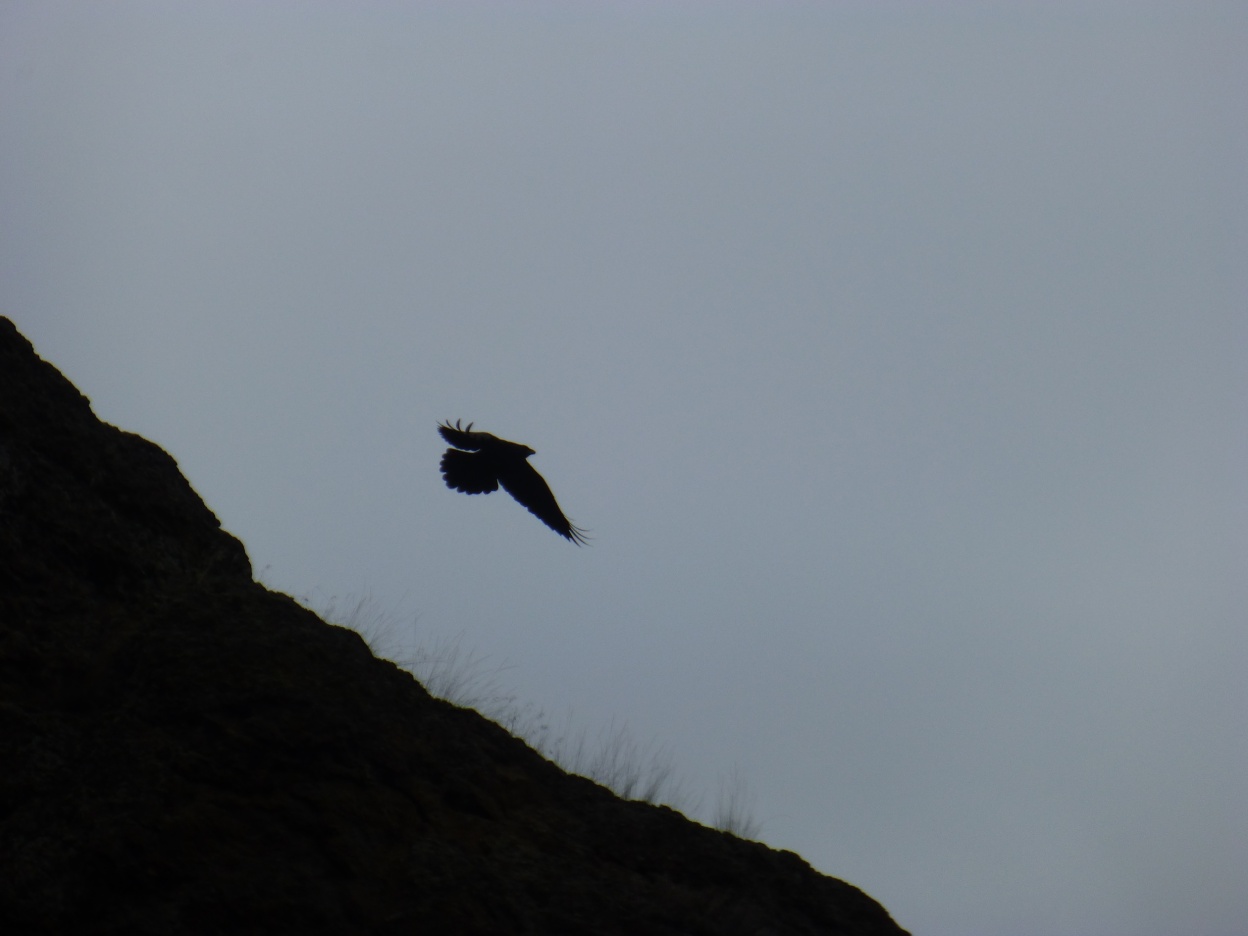
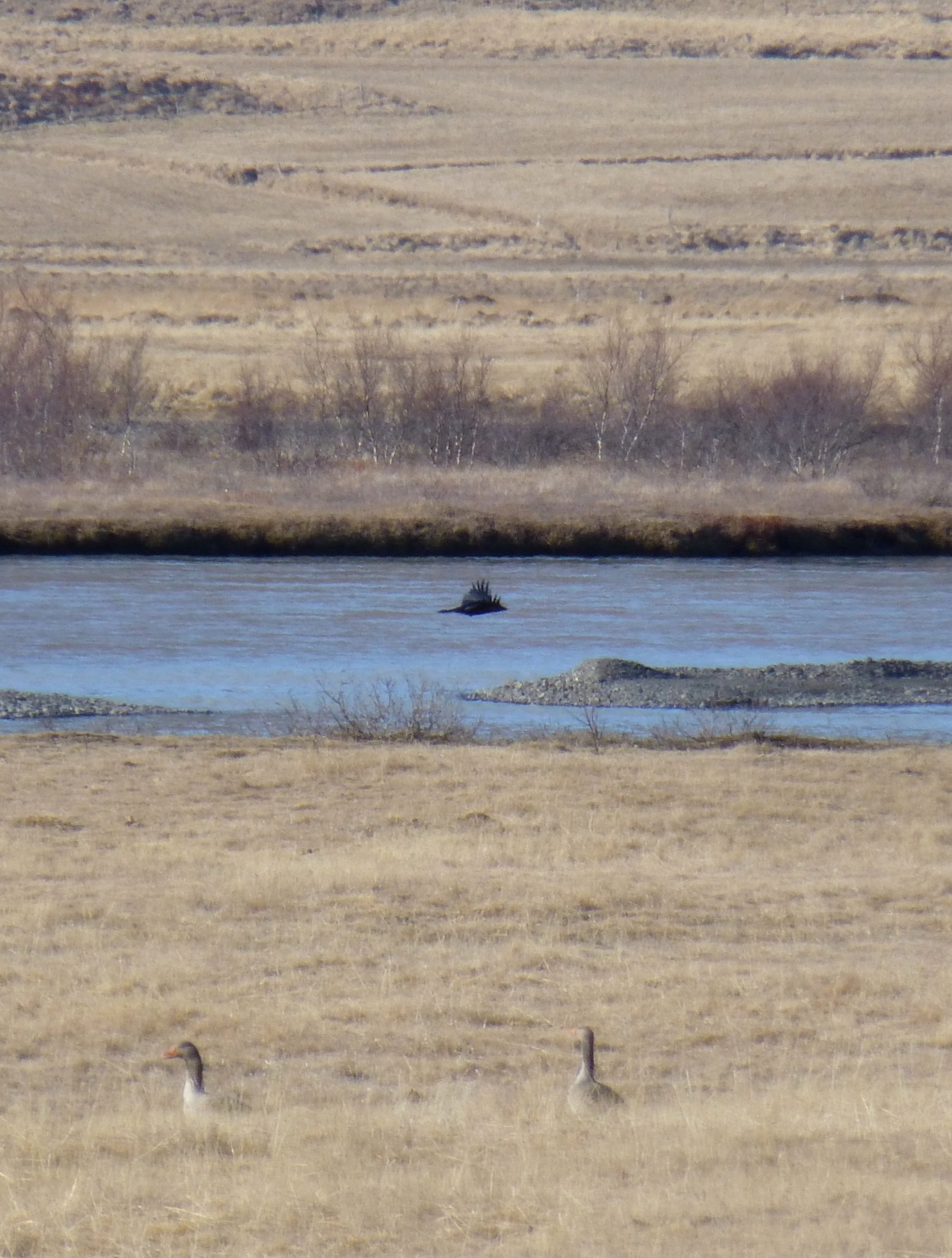
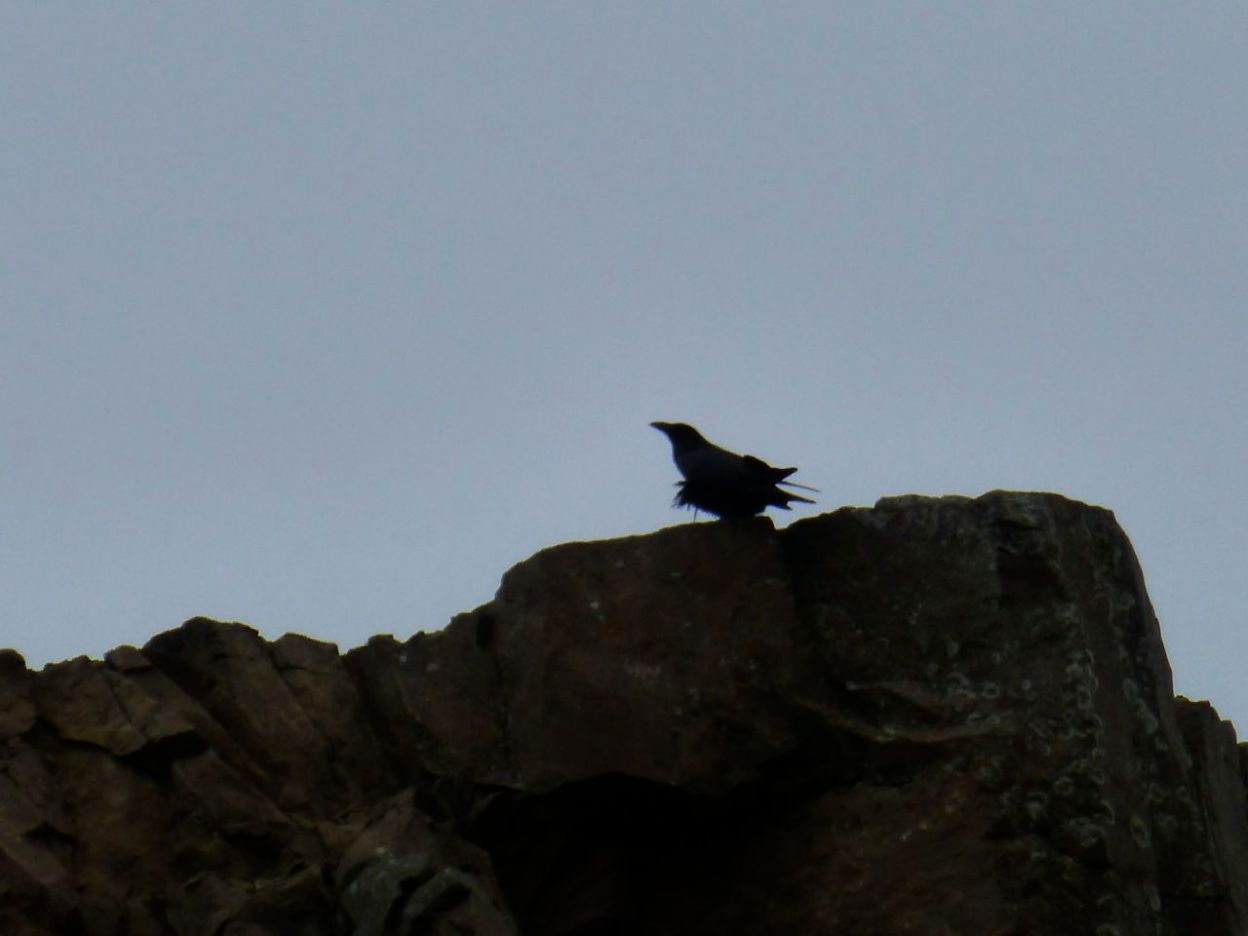
So, wind at any rate! There were ravens.
There were always ravens.
In many countries, they are birds, but in Iceland ravens are Thought and Memory, the capacities of human consciousness that create Mind and Consciousness, except here they are out in the world, not within human selves alone.
Oðinn did that by throwing his eye into the pool at the bottom of the world and getting, surprise!, the ravens as a replacement.
So, what to do with that? What started as an experience with no words had become the experience of having no self, or having the Earth as one! How do you share that? Well, I gave it a go, using the poetic form of a quickly sketched compass, the same four-part shape that was used as an oral map of Iceland 1100 years ago (and today):
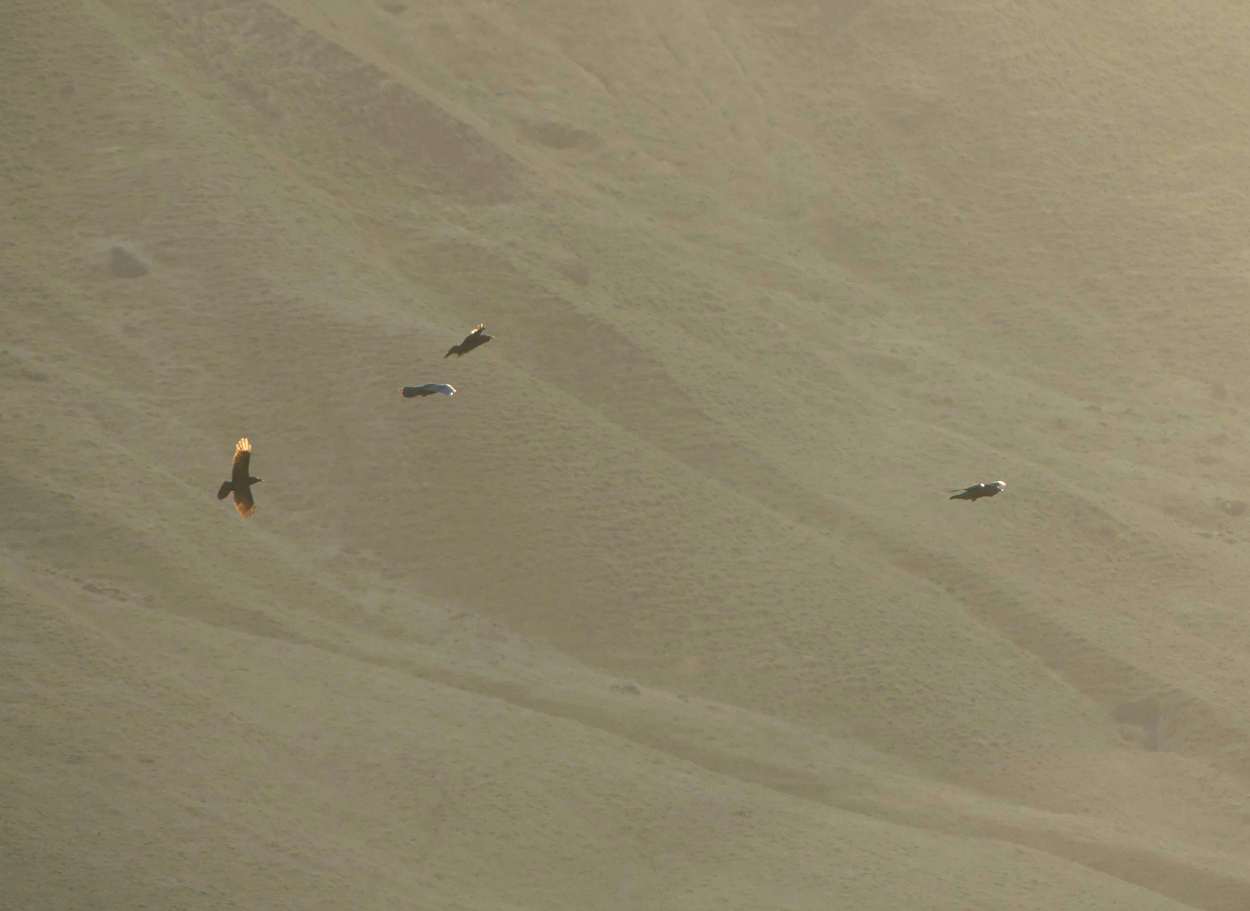
Ravens wheeling over the cliff faces
Well, that was fun, so I turned the page. After all, it had started snowing outside…
… with big wet flakes coming down sideways and swirling around any building that blocked it:
It went on like that for days, with the raven tracking me up the canyon in case a) I dropped a sandwich, b) slaughtered a sheep or c) lost my footing and became lunch…
… and exhausted at night, full of a language I could only understand peripherally, but which was taking over my mind and settling it out in a new shape. Eventually, it became a game of Where’s the Raven Now?
Raven Compass, Tricky-like
The answer was in plain sight, of course, but had to lead first to its natural conclusion through the path of self-negation. So, you guessed it, more math, like this:
I had moved on to a second notebook by this point.
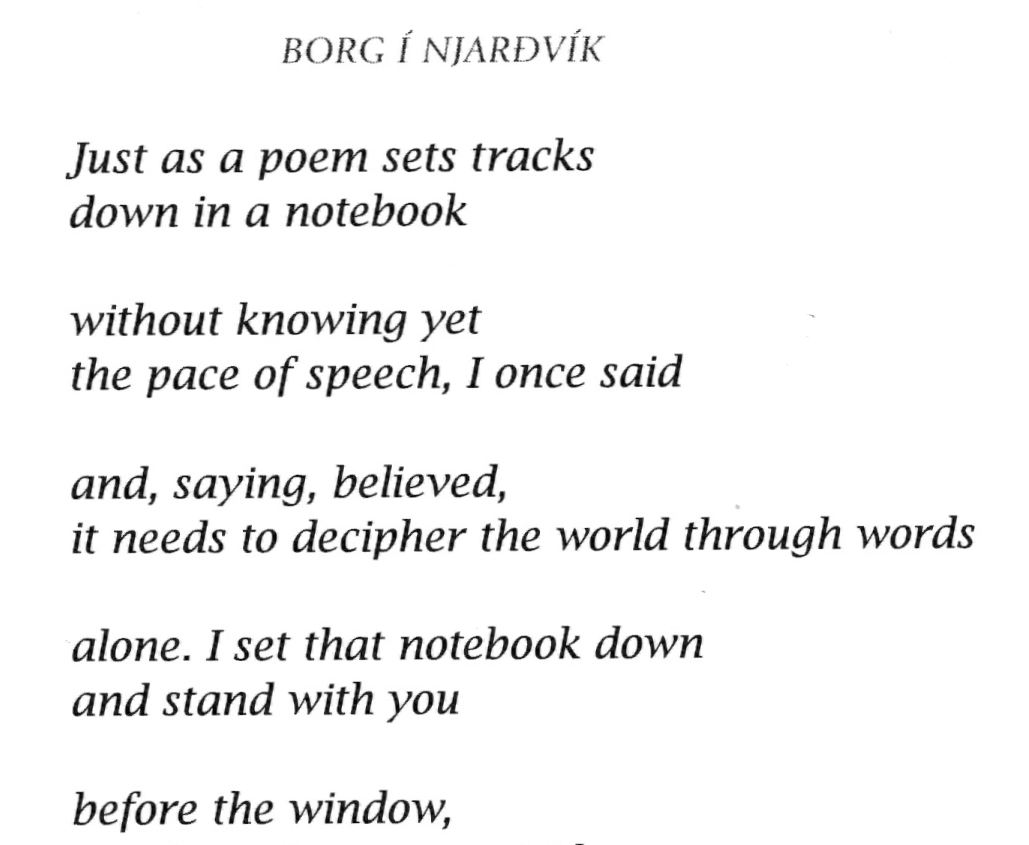
And I left it like that. My time in Iceland had run out. Still, I came back three years later and this time, in my exhausted evenings, travelling around the country, I wrote poems in words (of all things!) at night and, look at that, essentially they were the same poem as the visual artifacts from the trip before, except my English had become closer to Icelandic, elemental, like this:
from “A Prayer Before You Wake” in Landings: Poems from Iceland
There’s more than one way to poetry. Some, like this, lead away from poetry to the world, and find their mind, and self, there. It’s a place almost wordless, as Icelandic began for me, but not quite. Physical things are words there, just always on the edge of understanding and quickly flying beyond it into presence, not just of those living today but of those who have woven Earth and words for a thousand years and more. Here’s how I first put after I came home, if one can even leave such a place to go to another:
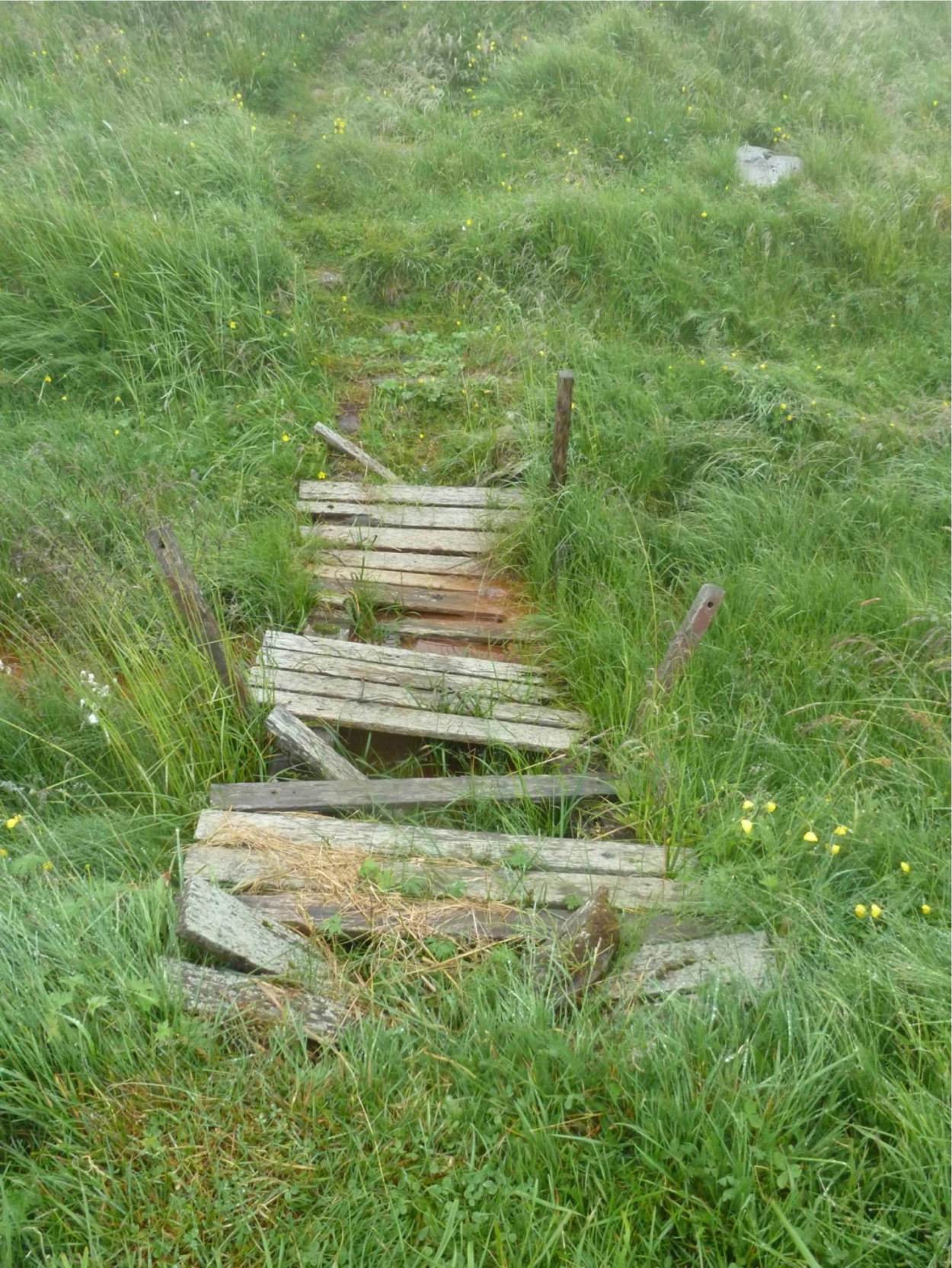
Photographs can’t quite pull this weaving off, but poems can, because they’re written by reader, writer and Earth at the same time. The path we walk today, whether it’s across a mountain’s back or through a poem, stretches back generations.
Such is reading a poem, too, especially with poems like those in Landings, which are the Earth and a compass at the same time…
… waking together as an island and an eye.
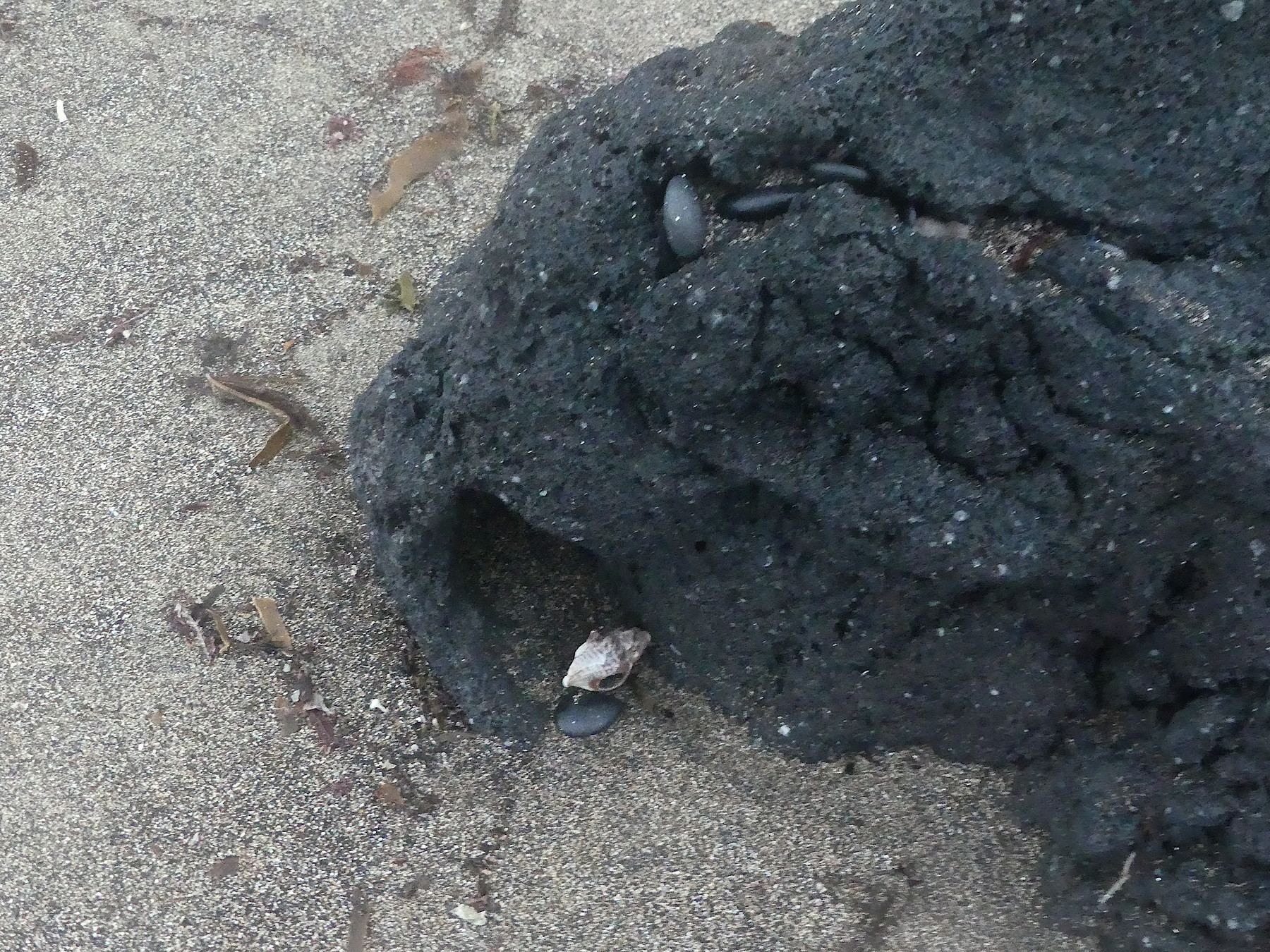
Stone Raven With a Glass Eye on the Beach at Hellissandur
Until the New Year, if you buy a copy of Landings, I will throw in a free copy of my book of German travel poems, Taking the Breath Away, for $30, postage included in Canada. That’s a $48 value. As the poet Pat Lane said of Taking the Breath Away
And since we’re talking names here, one lovely thing about Icelandic is it’s English with an old twist (or English is really bad Icelandic.) It goes like this:
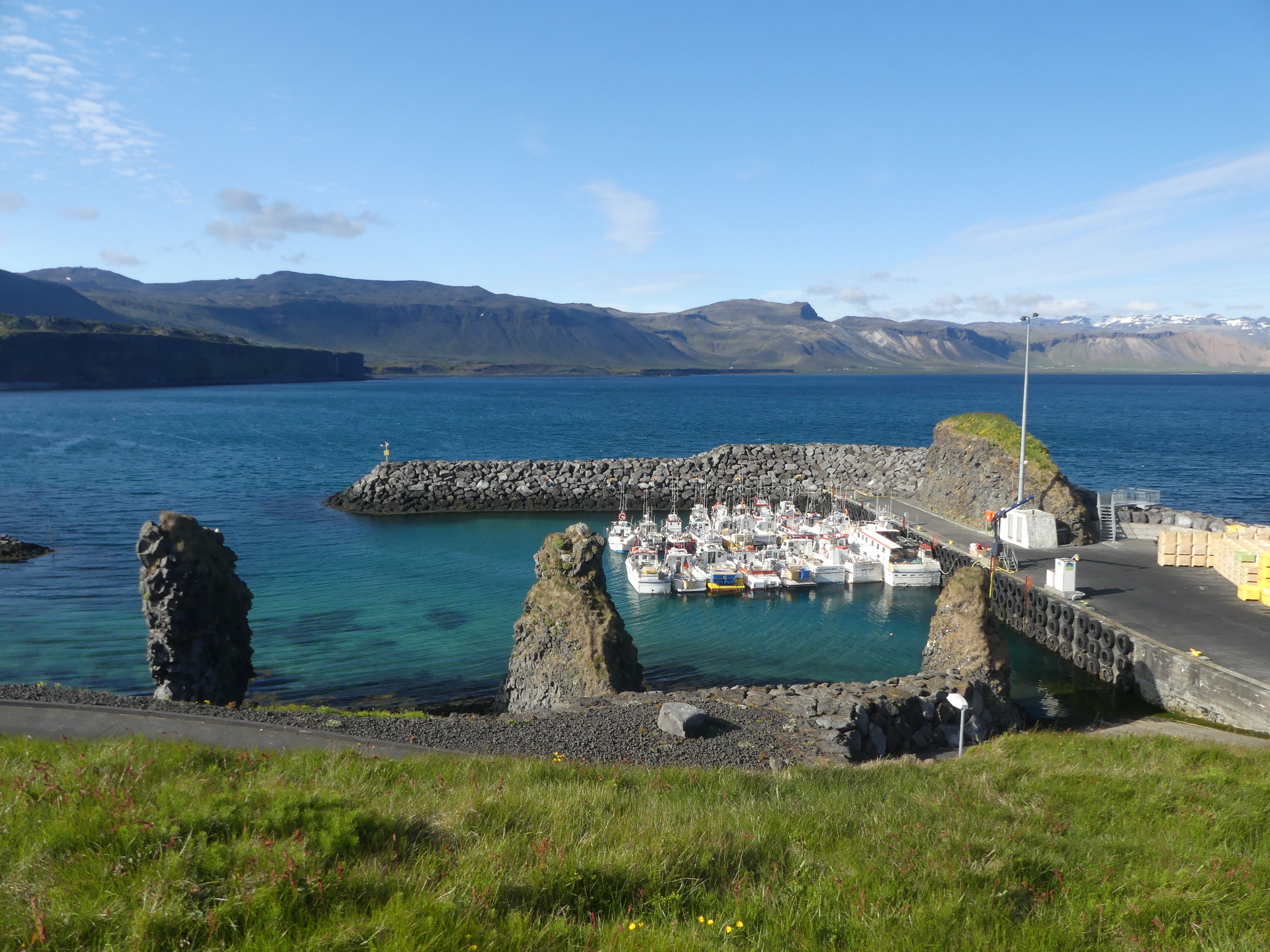
Arnarstapi:
Arn = Ern, the old word for eagle (eagle and eyrie both come from ern)
-ar is a grammatical connector, much like the ‘s in “eagle’s.” (But not quite.)
Stapi = Staple, in the sense of the little bent piece of metal that holds paper together. It seems odd, but the dear little thing is really named after the pile it holds, which is a stack. (In German, it’s simple. A stack is just a staple, and that’s that.) So, it’s a stack, a geological term for a stranded piece of a sea cliff, eroded away from behind.
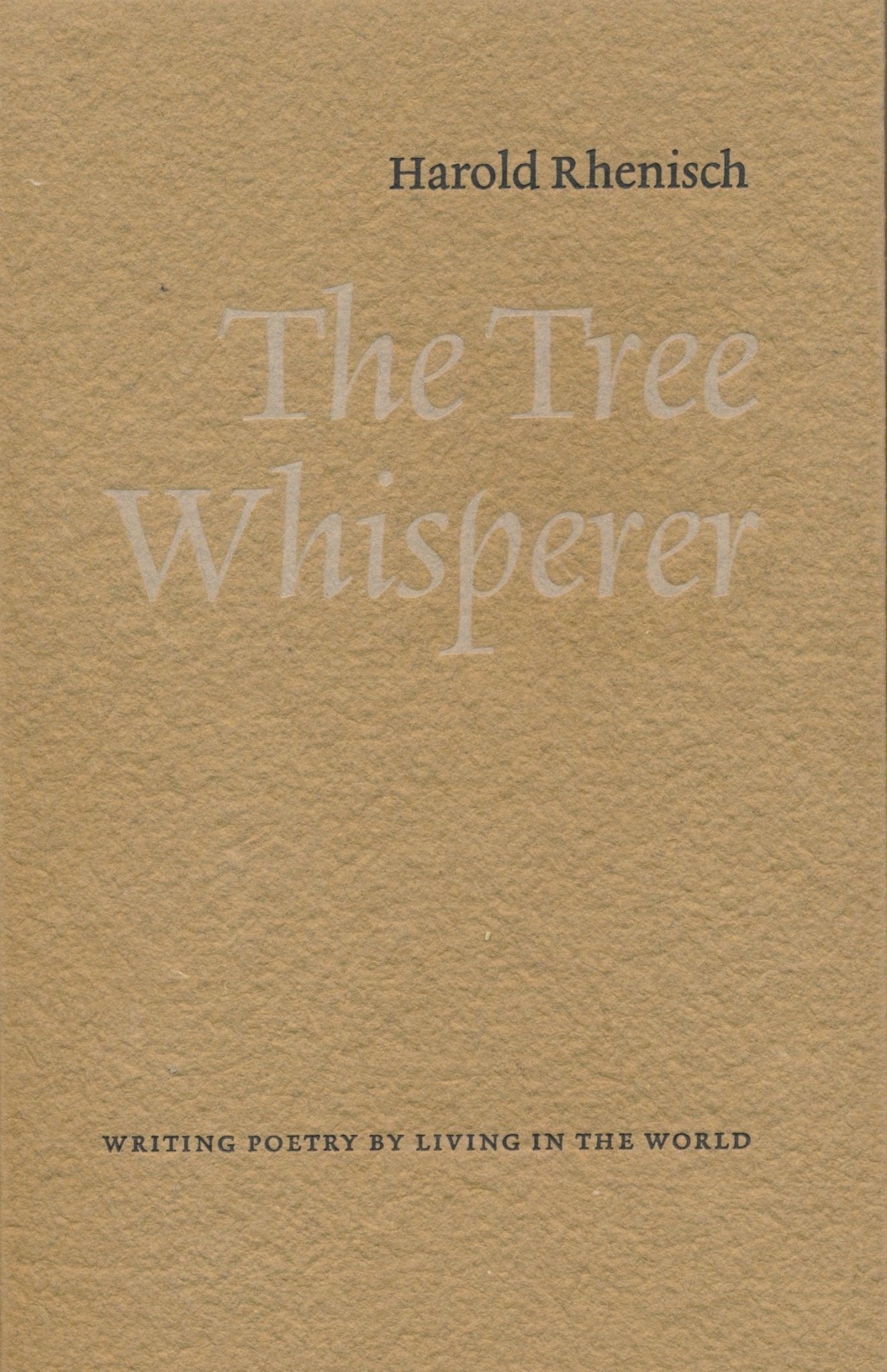
This is a beautiful book, that holds 51 years of my personal tree pruning experience, and a few thousand years of ancestral experience behind it. This hand-made book is just out from Gaspereau Press.
And about 55 years of conversations with my father about trees and the world. This is a book close to the heart. Look at what this blog has given us to share.
Isn’t that the truth. Fruit tree pruning is not about shaping a tree, nor is it about dominance. It’s about making space for light. One is really making a path for the sun. Trees will follow that. So do I.
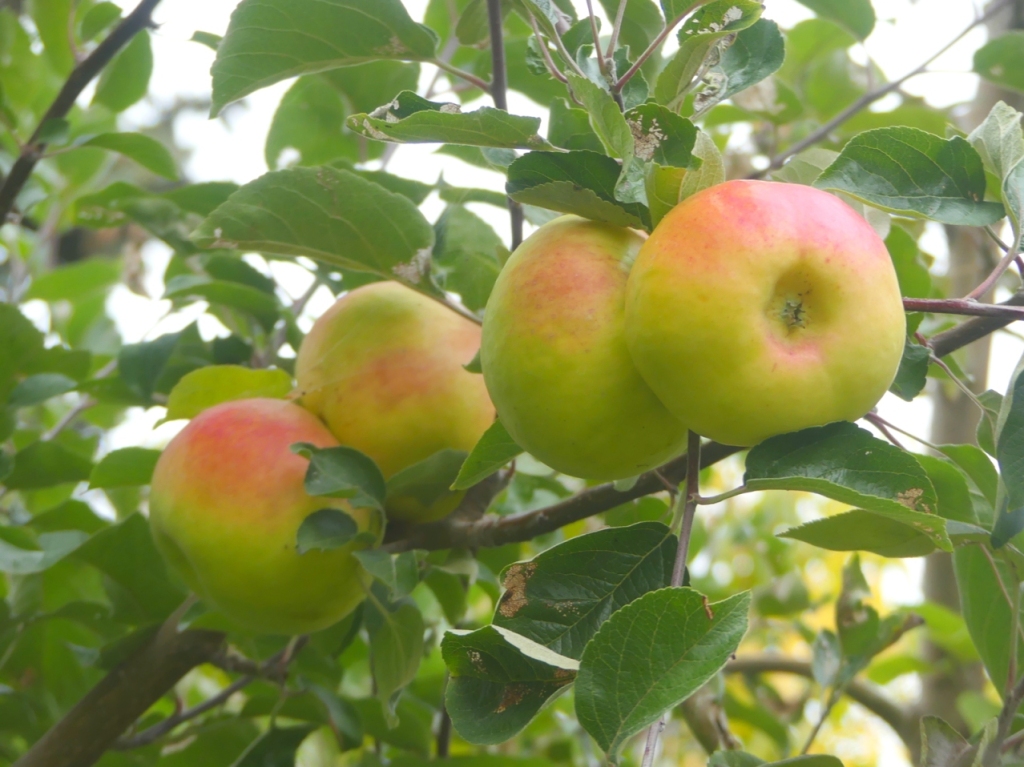
Forty-seven years of poetry are in this book as well, and close to sixty years of experiences with the Earth, as she has raised me and sent me on, from the industrial orchards of my childhood and youth, to my work today, rebuilding lost Indigenous orchards, one graft at a time. This spring, I pruned a transparent apple tree for a bear, even. That was the deal.
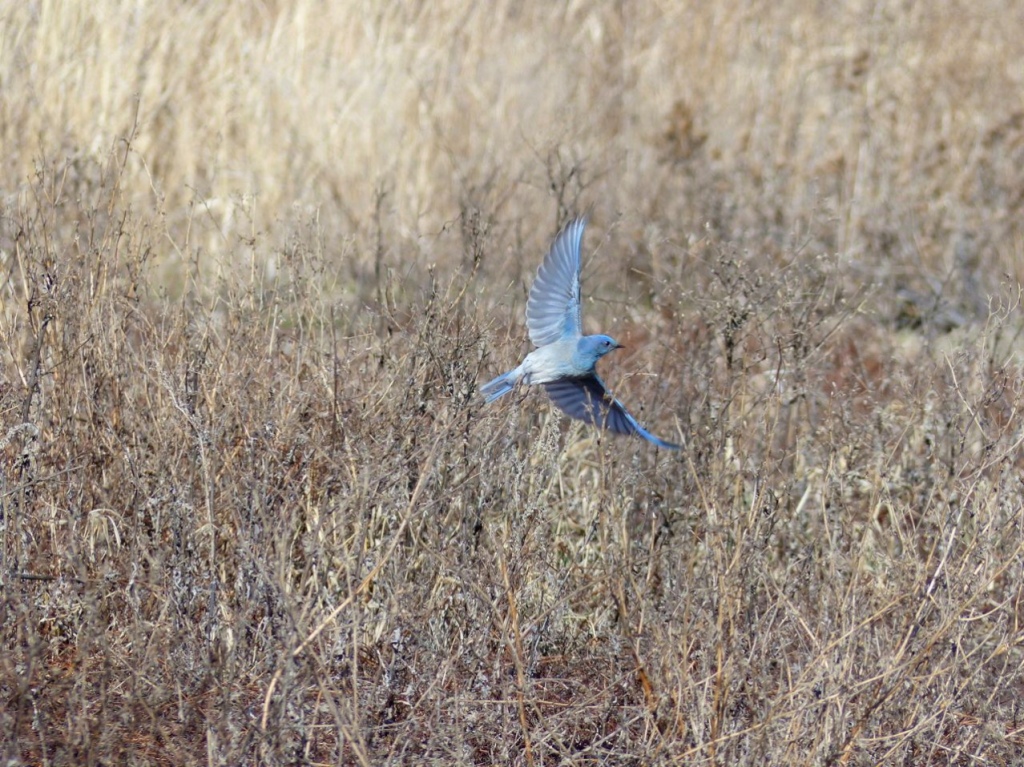
years, as bears, horses, human traders, bluebirds…
Chatting with the Neighbours from the Foot of My Ladder
..and my family, the Leipe’s, the tree people, have brought old knowledge forward into the present.
hem before I learned to write poetry. Unsurprisingly, when I started to write poetry, I was really pruning trees. This book is the story of that path. Its insights into poetry, and tree pruning, come from a deep path, in a sculptural art form in which one must see into the future through the body of another living creature, and work with her to help her thrive.
Benvoulin. We Found Each Other in a Ditch in Kelowna in 1981.
The Tree Whisperer: Writing Poetry by Living in the World is in the tradition of Henry David Thoreau’s essay Wild Apples, which he wrote after the Battle of Shiloh during the U.S. Civil War in 1862. It was a book about the apples he loved, as is The Tree Whisperer…
Such as grow quite wild, and are left out till the first of November, I presume that the owner does not mean to gather. They belong to children as wild as themselves,—to certain active boys that I know,—to the wild-eyed woman of the fields, to whom nothing comes amiss, who gleans after all the world,—and, moreover, to us walkers. We have met with them, and they are ours. These rights, long enough insisted upon, have come to be an institution in some old countries, where they have learned how to live. I hear that “the custom of grippling, which may be called apple-gleaning, is, or was formerly, practised in Herefordshire. It consists in leaving a few apples, which are called the gripples, on every tree, after the general gathering, for the boys, who go with climbing-poles and bags to collect them.”
Henry David Thoreau, Wild Apples, 1862.
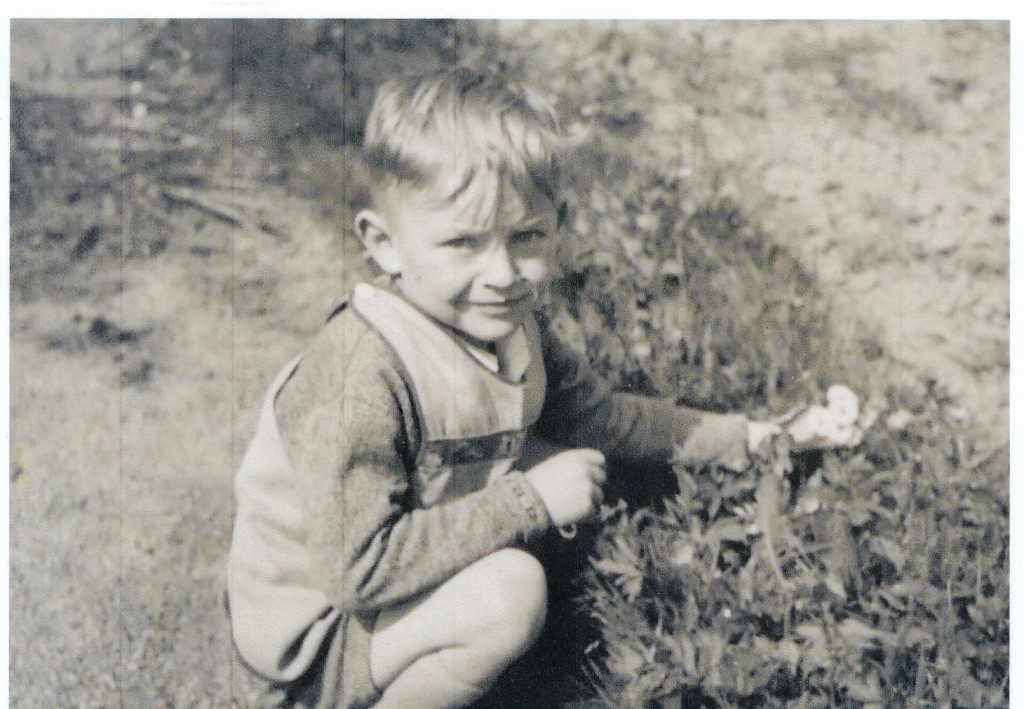
us in this conversation, as you have joined the 153,000 visitors to this blog, because this is a book about the environment, cultural reconciliation, education, poetry, our common past and our common future. In 1937, my great grandfather gave my father a garden …
Hansel Rhenisch, Black Forest, 1937
Hopefully, a long way. You can order The Tree Whisperer from a bookstore, or click on my button on the top of this page and I’ll personally send you a signed copy, with my blessings.






















 Harold Rhenisch
