Walking the Path of the World

The poet Daniela Elza has generously invited me to continue a conversation about books, called “The Next Big Thing.” Her opener is here. As this book is a collection of long poems, I hope it can join the conversation. The conversation takes the form of an interview by a text of a human talking about a text as if the human wrote it.

What is the working title of your next book?

Northwest. Here’s one of my co-writers …

buck

A Buck Swims the Hanford Reach…

towards the reactors.

 Where did the idea come from for the book?

I was at the League of Canadian Poets convention in the Canadian city of Vancouver in 2008. The Canadian poet Nancy Holmes admonished all present to learn what she called “your history.” She went on to quote a long list of important, historical Canadian poets. I realized that I was in the wrong room, as “my history” and my land (the Okanagan, Okanogan, Sinlahekin and other valleys and deserts that make up the Northern half of the Columbia Plateau) is part of the Northwest. It belongs more to Oregon and Washington and Idaho than to Vancouver or Canada. I also realized that my poetic traditions predate the arrival of Canlit in British Columbia in the late 1970s. Even seminal “Canadian” events like the War of 1812 entered my country through the U.S.A., rather than from Ontario or Quebec, through the filter of refugees from such battles as the Cayuse War, the Yakima War, and the Nez Perce War. I left the conference, drove down to Astoria, Oregon, and followed my river, the Columbia, home from the sea, like a salmon. The book came quickly after that.
P1140209

Almost Home …

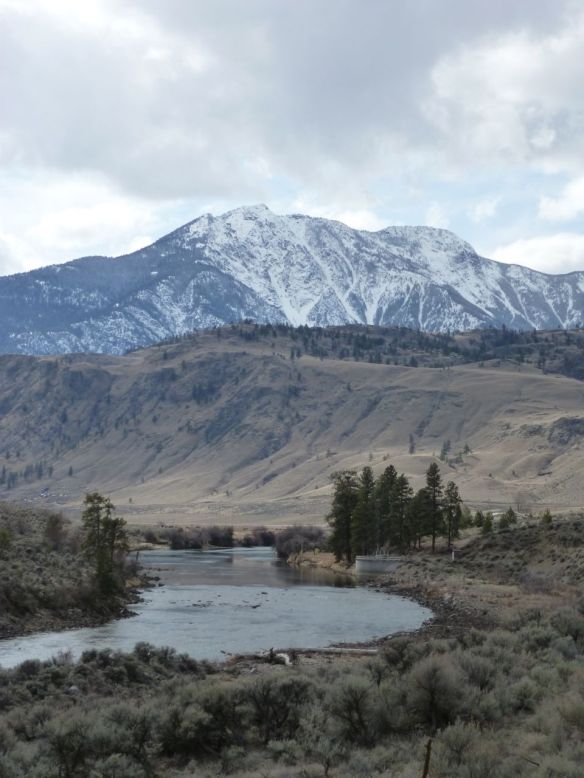
The Similkameen, near Nighthawk, Washington. The sacred peaks, Hurley Peak and Chopaka, are in the background.

 What genre does your book fall under?

I dried to drop it, but it flew. It’s the kind of book built out of words. The words are poetry. The lines are long. The language is oral, in both Chinook trade jargon and English. The book sings. It chants. It howls. It speaks the real names of this place. It praises, above all. It is about the salmon coming home. It is about living in one country without borders. If it has a genre, it’s a Northwest book of Shanties, to use the Chinook word for songs.

010199

 What actors would you choose to play the part of your characters in a movie rendition?

Yellow Wolf and Joseph of the Nez Perce, even if they have to show up only in spirit. Ian McKellen. Adam Beach. Evan Adams. Irene Bedard. The sound track would be Tsinuk drumming tracks, worked into a score by Michael Nyman.

What is the one-sentence synopsis of your book?

After thirty-five years, a poet and his friend Coyote follow the salmon home to write the book that Pound might have written had he gone to the Northwest and done the real work.

P1080198

Ancestor, Okanagan Falls

The Okanagan Salmon are barred from the valley at the dam at the bottom of Dog Lake, just a kilometre south of this point.

Will your book be self-published or represented by an agency?

It will be published by Ronsdale Press. 

How long did it take you to write the first draft of the manuscript?

Thirty-five years. 16,000 years. A lifetime. Every poet tries and tries to write one poem. This is my poem.
raven12

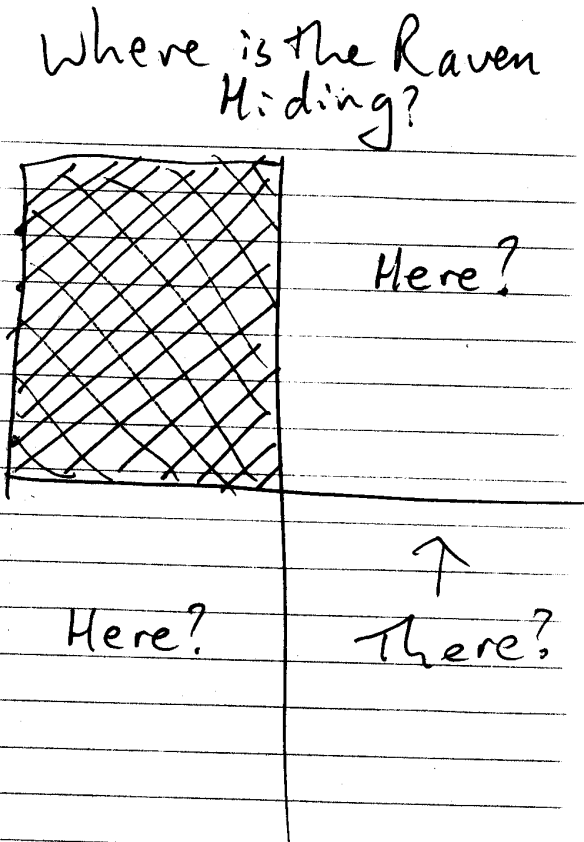
Early Draft of Northwest

Then it found its words.

What other books would you compare this story to within your genre?

The ancient stories of the Northwest. The Cantos, by Ezra Pound. Zone Journals, by Charles Wright. Voice, My Shaman, by Charles Lillard. Deathwatch on Skidegate Narrows, by Sean Virgo. Axion Esti, by Odysseus Elytis. The stories of Harry Robinson.

9780889225220

Who or what inspired you to write this book?

That’s a better question. Sherman Alexie’s The Pow-Wow at the End of the World. The writing of Motherstone: British Columbia’s Volcanic Plateau, in which I found the bones of this land. My old walking buddy, Coyote. The Sugarcane Father’s Day Pow-Wow of 2007, which brought me a second place prize in the CBC Literary competition (which is in this book). On the Mysteries of the Egyptians, Chaldeans and Assyrians, by Iamblichus, a revised translation of which won the Malahat Long Poem Prize (large sections of it are in this book as well), before I was barred from entering the contest for winning twice. With no more outlet for long poetry, I wrote this book of long pieces instead. The University of British Columbia, for presenting a view of poetry as a personal, lyrical, global project, drawing exclusively on North American English speaking traditions, that drove me to write instead what I knew: a land and its people across time and space. Janice Frank, for welcoming me into her Secwepemc language class (for two years) in 100 Mile House and showing me the true meaning of respect. Ultimately, Charles Lillard, who showed us the way but died too young, before he finished, and Robin Skelton who worked with him on the Northwest Renaissance project. This is a part of that project, a few decades after Canadian Literature took over the helm in this place. Pound, always. The Columbia Plateau. St. Mary’s Mission in Colville, Washington, and the Kettle Falls that are no more. The ecologist Ordell Steen, for taking me out to the Junction Sheep Range and showing me the story I already knew, about the grass, and finding words for it, together, in Spirit in the Grass. Long talks with Van Egan, Roderick Haig-Brown’s friend in Campbell River, about becoming the river, which became the text of the first Roderick Haig-Brown Memorial Lecture. The Last Great Sea, by Terry Glavin. The Earth. All the ancestors.

mother

What else about the book might pique the reader’s interest?

Raven sings.

raven Raven, Columbia Gorge

*

The discussion is set up as a game of tag, in which each human gets to tag another human to be interviewed by the text. I’m going to use the opportunity to tag five other books. Rather than having them interview humans, I will interview them instead. These are:

The Art of Haying, about the world past the age of the book. Meditations. and An Expedition to Iceland, about Old Norse and English. Poems.

The Book and the Goat, platonic dialogues between a book and its critic. Philosophy.

White Noise, a pilgrimage on the Camino through East Germany. The third volume in the Faust trilogy. The other two were written by Goethe. At the middle lies Buchenwald, which was built to imprison Goethe. Really.

Atomic Okanagan, or Back to the Interior, a memoir built around the effects of the Manhattan Project of the Central Columbia on the Okanagan Valley (in territory claimed by Canada).

Planet of the Sun, a book of environmental science and writing, built around the explorations here, and its companion, The Terroir of Riesling, part of a project of transforming literature into agro-ecological writing.

I know that to follow the rules of this game I should be tagging poets from my country and my culture, who are going to be the Next Big Thing. I would love to meet such poets. As for the Next Big Thing, I lost my identity in East Germany and have spent four years now building a new one. It doesn’t include the ability to turn myself into an article of commerce anymore. My trip became a pilgrimage, not through identity but through the world, deeply immersed in the communist-post-communist-and-capitalist nuances of the fall of East Germany. I found my way home in No Man’s Land between them, but it was touch and go. Each of the books above has been written by a different person. I am none of them. So it is in my country. I hope it will do, Daniela. Blessings.

What is Art?

Seriously. I ask, because there’s this: How Food Replaced Art As High Culture. Don’t be fooled. In its musings, that article from the New York Times doesn’t give the explanation it suggests that it might, but it does say this:

But food, for all that, is not art. Both begin by addressing the senses, but that is where food stops. It is not narrative or representational, does not organize and express emotion. An apple is not a story, even if we can tell a story about it. A curry is not an idea, even if its creation is the result of one. Meals can evoke emotions, but only very roughly and generally, and only within a very limited range — comfort, delight, perhaps nostalgia, but not anger, say, or sorrow, or a thousand other things. Food is highly developed as a system of sensations, extremely crude as a system of symbols. Proust on the madeleine is art; the madeleine itself is not art.

You can be forgiven if you are confused by this point, or if you sense that the article is a wee bit patronizing, because it is. Here, I’ve boiled it down for easier understanding:

The Red Herring Within the Text

In a culture based upon advertising, partisan debate and rhetoric, expect fish.

Yes, everything in the article is true about food. Food really isn’t art, as least as the article presumes it is. That’s not the question, yet here’s how the article puts it, with its unstated assumptions:

Art, as WILLIAM DERESIEWICZ sees it. Food as he doesn’t.

Art is story, idea, symbol, and evoker of emotions. Food is food and a sensory pleasure. That’s what the man says.

Can he really have it both ways? Can he reserve all these categories of thought for art and none for food? So far, classified within the thingamajig he calls art, Deresiewicz has fiction, philosophy, mathematics, and emotional doodad. I promise, tens of thousands of artists, writers and thinkers across the world would be happy to refute every one of those points. And that’s not even getting to the poets, who seem to be strangely left out of Deresiewicz’s universe. In fact, any broad collection of happy thinkers and cognitive and cultural workers would dismantle Deresiewicz’s thesis in endless profusion. And would still be a red herring. The question would be better put as this:

The Real Question

Now we’re getting somewhere. Take a pear. It has a history. It has colour, to which people respond. It has nuances of flavour and shape. Has a context and provides a context. It has social, political and ethical connections. It provides personal and cultural meaning. It must be cultivated, can be produced industrially yet tastes far better and does better social work if produced artistically. It  does the soul good. It is alive. Those aren’t art, exactly, but they’re parallel to it, which means that, yes, they’re art, just for a different class of people, within a different intellectual, social, and aesthetic context.

Horticultural Watercolour of a Vicar of Winkfield Pear

When illustrations such as this were made a century ago, watercolour painting was not considered art. It was considered a technique for the accurate rendering of colour and shape in medical, botanical, zoological and agricultural specimens.

Artists moved on, and showed how watercolour technique could develop a rich language of textures and gestures. When it did, it was accepted as art, although one could point out that it was art before that as well. The pear, on the other hand, was industrialized. That was a cultural choice, not something inherent in pears. Pears today, remain as that cultural choice. Anything we do with pears is in dialogue with such cultural choices. And not just pears…

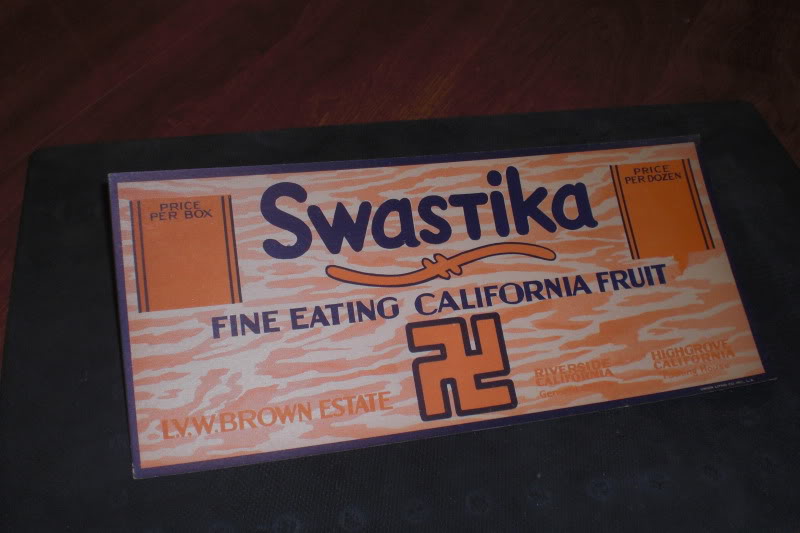
1930s California Orange Crate Label

A century before the art and illustration within horticultural paintings parted cultural ways, pears and art had not been separated from each other yet. The planting of pear trees and the growing of pears was considered high art indeed. It was all craft, which included the crafts of painting china, writing poetry, dance, painting portraits, and growing pears, just to give a few examples. There was a time in which this mattered. Here’s an image from that time. This statue looks out over the botanical garden towards the greenhouses of a baroque remake of a renaissance city residential palace in Fulda, Germany:

Agriculture, Stadtschloss, Fulda

Here is her consort:

Mathematics, Stadtschloss, Fulda

They were a a pair. Through applying the spiritual and intellectual force known as the art of agriculture, in conjunction with applied mathematics, known as land surveying, a prince could run his kingdom, through applied art. The only difference between that and Deresiewicz’s conception of art as a high craft is that the focus has moved from the leading of kingdoms through the integration of all sensibilities in the court (and especially in the body of the prince) to the administration of constitutional democracies through the development of those characteristics within all individual citizens. It’s not the prince who develops thought through balances between various emotional pressures in Deresiewicz’s world, but everybody. It’s not the balanced administration (hopefully) of a kingdom that is the goal, but the balanced development (hopefully) of individuals, who can then contribute their deeply developed energies to a common pool of energy. The conclusion Deresiewicz might have drawn is that these people, given an art that granted privileged status to universal feelings of social and political connectivity through narratives of the individual and his or her emotions, have now accepted that, and have moved into it. The circle is complete. No, the new food culture that is the result is not ‘art’, as Deresiewicz defines it, but it does what art does, for a new people, looking for an expanded sense of ethics able to more accurately reflect the complex interconnectivity between citizens.  And why not, when the kind of connectivity that comes out of Deresiewicz’s art world leads to manipulative discussions, such as Deresiewicz’s own? Here’s an image of what I mean:

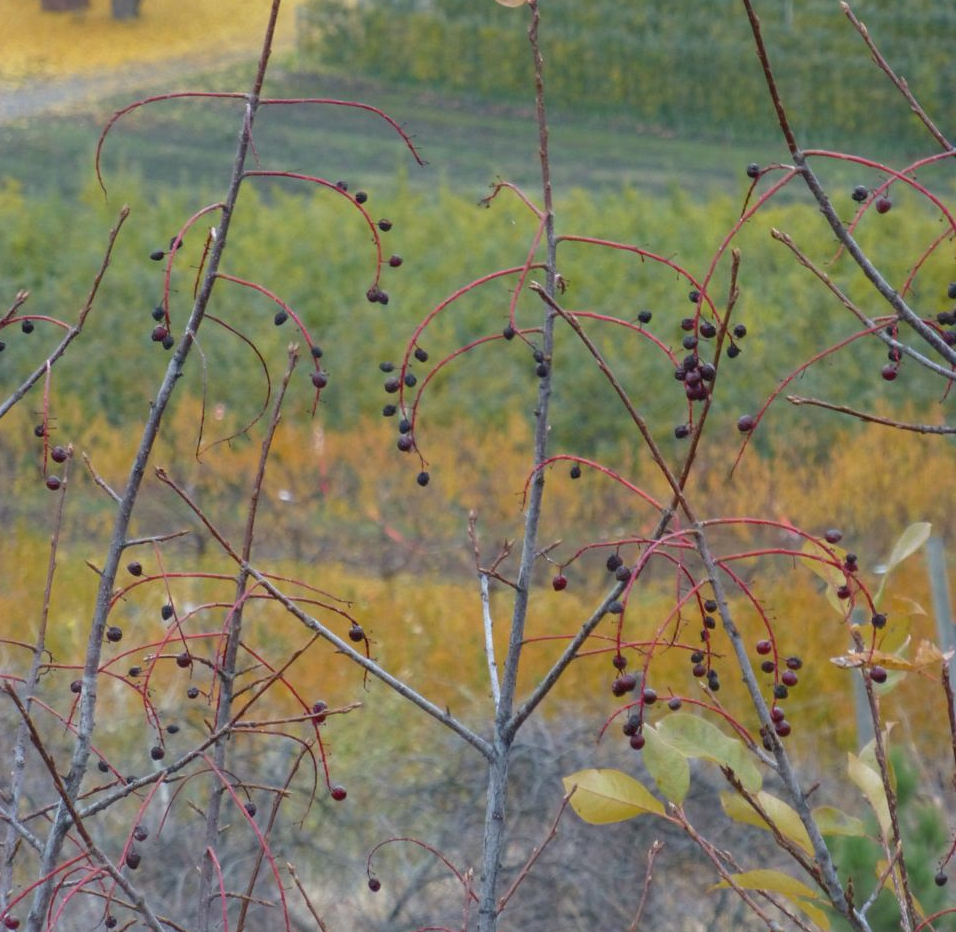
Wild Cherries Left on the Branch …

…against a backdrop of colonial era orchards. Early November. Okanagan Landing, BC

The fact that pears, or apples, or peaches are even grown is very much a series of cultural choices, which meant that other cultures, such as, in the image above, the Sylix plateau culture, were suppressed in order to grant it ascendancy. It’s all politics. It’s all ethics. It’s all art or the suppression of it. As the East German dissident writer Stefan Schütz said, after being stripped of citizenship and booted out to the West (in paraphrase), I will look for  creative energy wherever I find it, even among the criminal classes, if that’s where it is, because it is invaluable and I’ve seen too often what is there when it isn’t. He meant, even among the political elites. He meant, even in the sanctioned artistic classes.

Public Art Installation (Electrical Power Box) Okanagan Landing

This is what official, public art looks like when politics and art have been divorced. That the people are asking for them to be reunited in the context of food is a good thing. Let’s run with it. The confluence of energies produced a whole world once, the world we’ve been living in for a couple centuries. We can do it again. Art’s not dead. It’s just gathering its breath for a new flowering.

Why not join the conversation? I’ve been exploring these ideas for over a year now, in my blog Okanagan Okanogan. For a summary of the story so far, click on the .pdf file at the bottom of this page.

A Journey into the North

A few weeks back I came across a stunning piece of music. Little did I know it would take me into a poem I’ve been travelling towards for a long time. Here’s the music that first enchanted me. It’s in Norwegian, but it is beautiful in any language.

Then next step in this journey was this post in Sigrun’s Norwegian Blog about nature, reading, writing, and home: Sub Rosa. I was quite taken by the wooden nature of the translations (done by prominent 70s-era poets), and asked if there might be an audio version. Sigrun generously replied, with this post, which contains some evocative imagery, and this reading, by the poet Olav H Hauge:

And what do you know, that’s the poem that Sinikka Langeland was playing and singing, that first enchanted me! That got me to thinking further, and with the help of YouTube, I quickly found a stronger reading by Hauge, although not of Det er den Daumen. Here it is:

In this reading, I got a feeling for this man’s work in poetry: wit, coupled with colloquial changes of rhythm, and great brevity. When I listened to Det er den Daumen again, I heard complex rhythms in his final sentence, which matched his thought but which the English translations just steamrolled right over. So, I offer here, as a part of a process of unfolding thinking, this version (it’s not a translation) of Det er den Daumen, which steps out of the hybrid modern vocabulary and simplified grammar of late twentieth century English into a more complex syntax, married with English poetry’s roots in spell craft and English’s Old Norse and Anglo Saxon vocabularies for the physical and spiritual world. I post it here for Sigrun, with my thanks. I don’t know if I did the poem any justice, but I think some music and wit found me in that last line, and that’s at least something:

It is the Dream

And so my journey north, into the heart, continues. You can download an mp3 reading of a slightly earlier version of this poem here.

Writer in Residence in Iceland

Great News! I made a successful application to the Gunnar Gunnarsson Institute. I’ll be living in Gunnarsson’s house in East Iceland from March 25-April 21, 2013, where I’ll work on a photo, visual poetry and textual essay. Gunnarsson and I share a history, one that quickly unravelled for him in 1940 but which I am still living out in Canada. Through extensions of my work with Old Norse in The Spoken World, a translation of the text that Gunnarsson read on his German tour, and my personal perspective, I’m going to show how Gunnarsson’s combinations of fiction, poetry and nonfiction were three generations ahead of their time. Besides, I fell in love with Iceland in two visits over the last three years. I get to go home.

Gunnarsson’s Farm House in Fljótsdalur

Architect, Fritz Höger (with a little Icelandic puckishness added in situ).

The Gunnarsson Institute is located at the head of the Fljótsdalur valley, on the river crossing that led to the historic trail south through the mountains. Here’s a photo overlooking the valley from the hills. The institute is at the foot of the mountain on the right. The pass to the south is in the middle of the image.

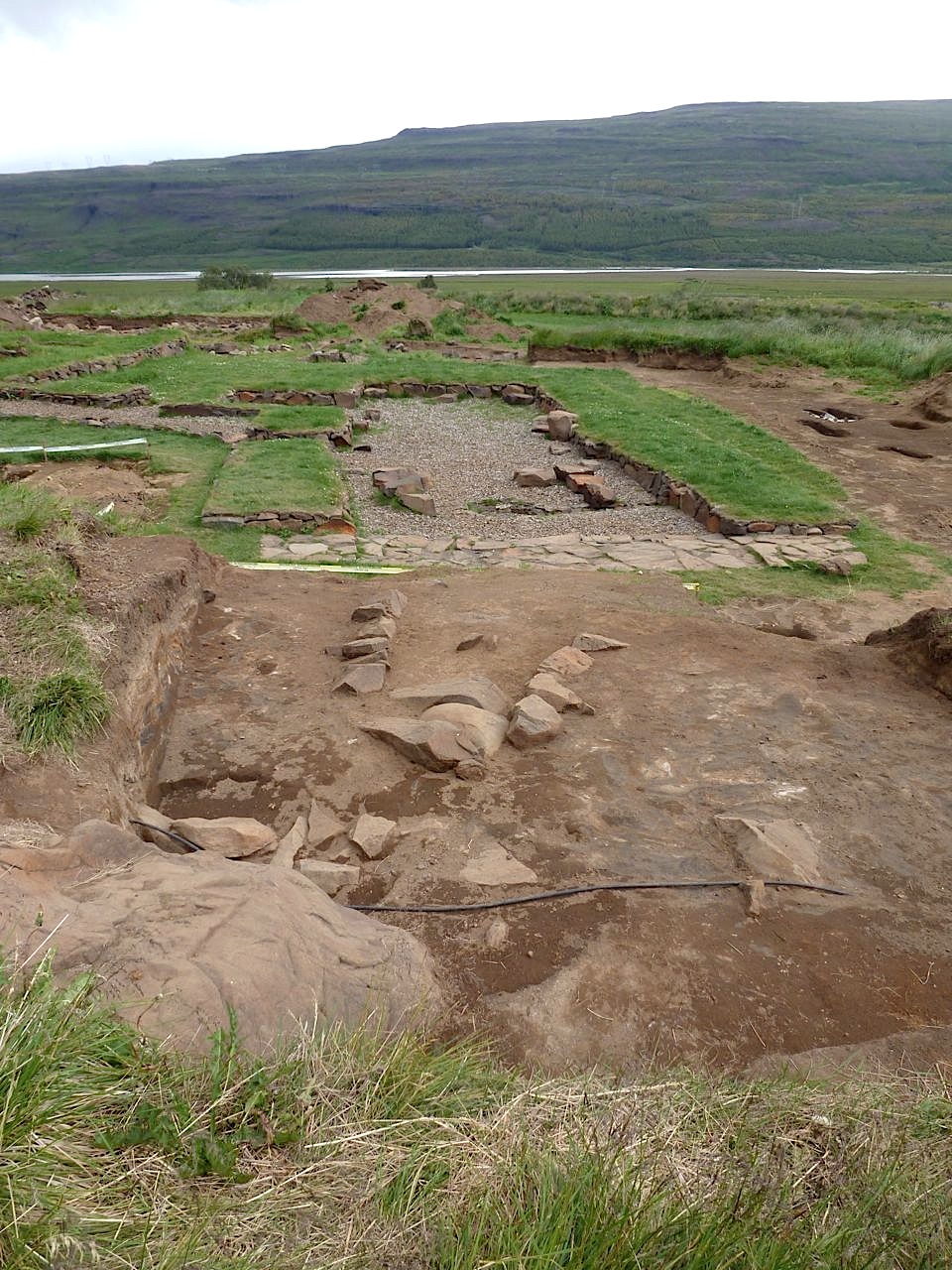
Because of its strategic location, the farm was once a cloister. This late Catholic institution is currently under excavation…

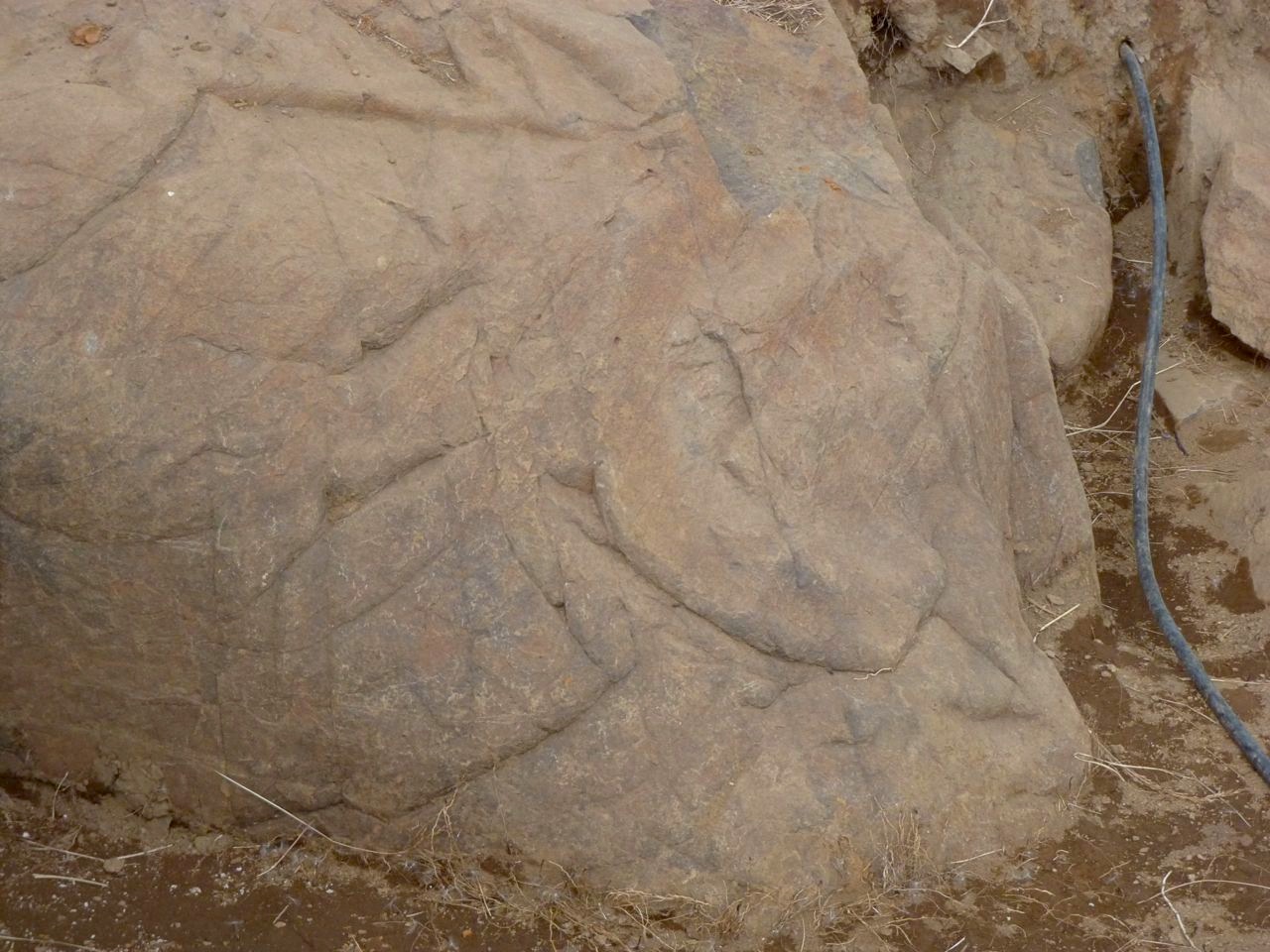
Typically for Iceland, it is constructed on an elvish site, presumably to integrate early Icelandic spiritual life as a prophecy leading towards the Catholic faith.

Elvish Rocks with a Natural Cross, Skriðuklaustri

The pattern was repeated within the cloister itself, with a cross and numerous magical runes scratched into a very elvish looking rock at the very deepest, darkest point of the interconnected halls…

What’s not to love? There are sacred rowan forests above Lake Lagarfljót to the west …

… and good memories …

… and water falling from the sky…

Gunnarsson pointed out that even the darkness of the sub-arctic winter is precious to an Icelander. I’m thrilled to be going outside of the summer’s eternal light, to ride that wave of the dark into the spring.

Winston, A Great Literary Dog

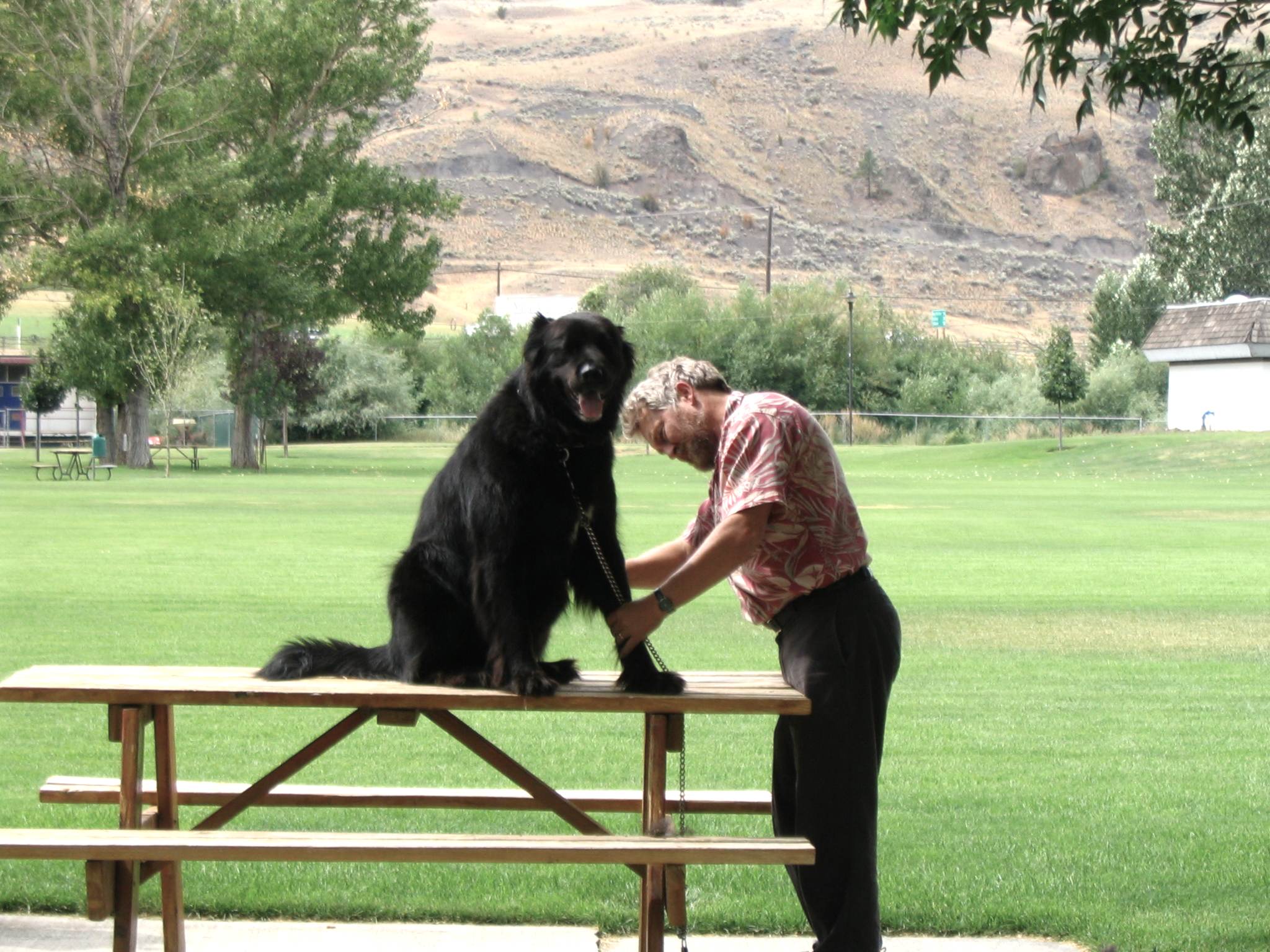
Today we’re mourning our dear friend, Winston, who held us up when we fell and showed us where all the interesting stuff was, starred in a couple books (see below), and just loved this world to bits. He was an inspiration. He was born out in the Chilcotin. Things were rough. Together with his mother and his three siblings, he was soon in the SPCA in Williams Lake, which is where he found us, chose us, and convinced us to take him home. Things were great after that. Here he is, for instance, getting a little grooming in Cache Creek, while coming home from a camping trip to the Olympic Peninsula:

Winston Loving It

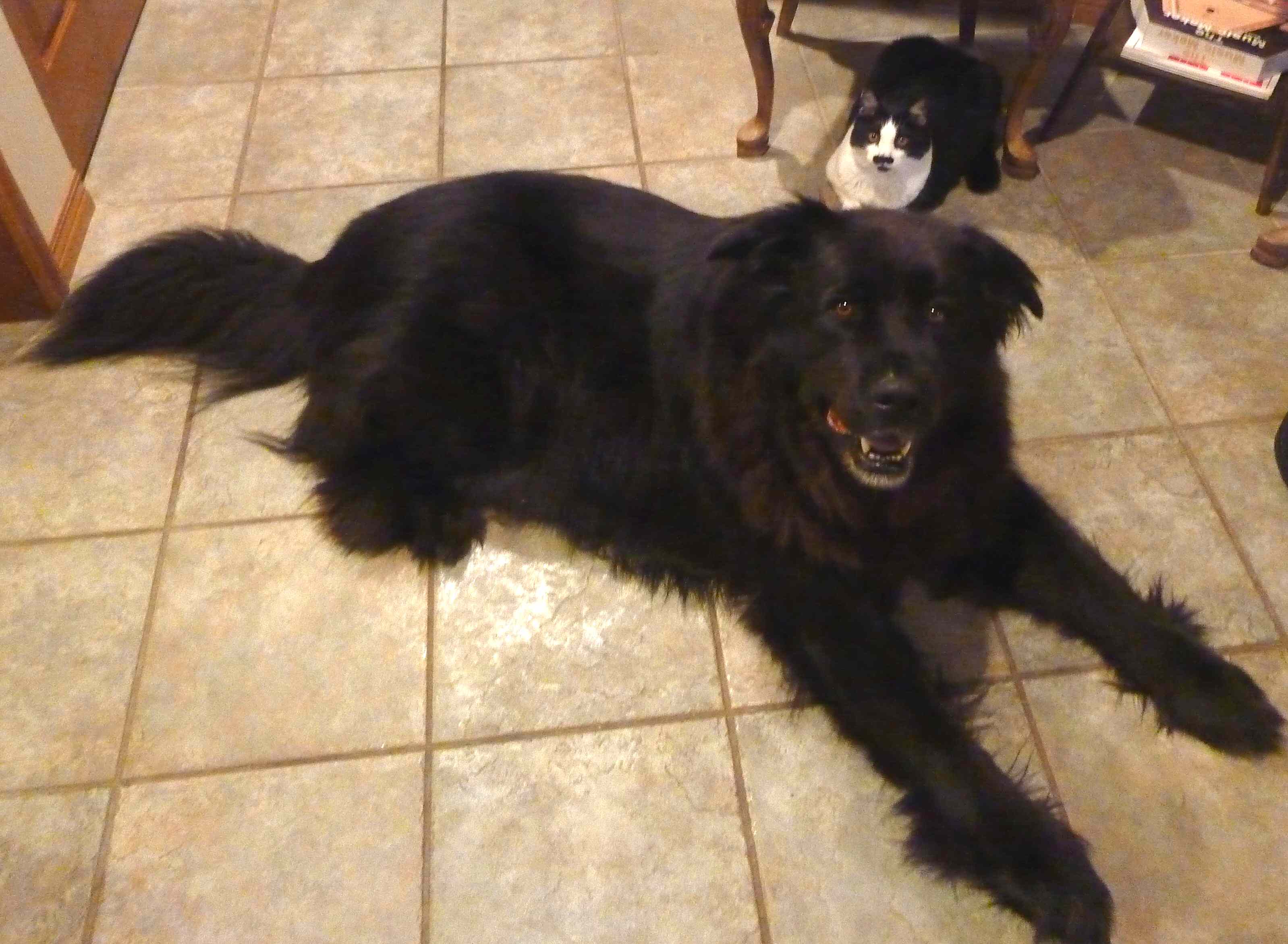
Here he is, with his cat Charles, in Campbell River…

Winston and His Cat

Still loving it.

Here he is hard at work on the set of the Okanaganokanogan blog, leading the way…

Leadership, Cooperative Style

A big chunk of the spirit of the world found expression in his 125 pounds.

Winston, September 30, 2001 – January 25, 2012

Winston fills out the final section of my Winging Home, in all his youthful zest. Here’s the poem that he helped me write on a few  walks in the Cariboo, and which won the Malahat Review Long Poem Prize. I think it’s a fair tribute to a great literary dog. I hope it is.

The Bone Yard

Winston sits out in crusted snow —
once white, now violet — while the blue
plateau moon sheds
her mesh nylon stockings.

What am I going to call a dog like that?
Who stands on two legs, cocks
an elbow over his gate and looks
me straight in the eye?

Not to mention the days the German
shepherd in him gives me
a gold-toothed glint — when
he looks like the wolf from Little
Red Riding Hood, and it’s best
just to walk away,
and quietly close the latch.

In the Vaude, in the Swiss
uplands, the Celts held
out against the Roman sons of bitches
and then against Christian
rogue monks dressed in potato sacks, whose best
trick to win souls was to feed bread to bears.
Every monk within two hundred miles sliced
and served that pumpernickel. Later,

a black dog — like, for example, Winston —
was sent ahead to talk
to the dead, and to return
with their blessings
for children and good
crops, or maybe just an old bone.

The monks of the Hospice
of St. Bernhard, where Hannibal’s
elephants had hard
going of it at the very worst
time of year, hit
on the trick of saving travelers with dogs
descended from old Roman
warrior stock,

Rovers and Fangs and Busters first
sent north to tear
the monks’ Celtic
ancestors limb from limb.

The tonsured even crossed
their pups with Newfies to get thick coats
on them for the snow and cold
particular to those
parts — so close to Heaven (purity such
that no living man not sheltered
by his faith could withstand it),

but had to abandon
the idea when the dogs’
long hair matted with snow, and the big,
smelly lugs had to sleep
indoors to keep
warm — which is to say that, maybe, it’s not
so bright an idea
to take a seagoing
dog into the mountains, when
he’d rather be snuffling at an old, rotten fish.

I named him after Churchill,
because of the way he stuck
his tongue out
to the side, like a cigar, and, besides,
he would look good
in a top hat, with a cane, too,
and maybe even, yes, with a cod,
fresh or salted, but you can’t
have everything,
can you.

Still,
Winston does look a lot like a bear,
and in hunting season
I am tempted
to spray-paint DOG across his flank,
after all,
just to keep him safe, you understand,
from stray hunters,
who wander up into these parts from
the cities down South,

where they don’t
know shit about what lives
out on the land, but are eager
enough with their Remington
soul catchers and their quads with
gun racks and retro Vietnam
camo paint —
to claim it as their own.

He was bred as an attack
dog — some guy way out
in the bush
past Hanceville
wanted an Akita that could
take the cold, and maybe
was a little less independent,
which is, perhaps, a good
thing in a dog, I wouldn’t
know — and was claimed
by the Society for the Prevention
of Cruelty to Animals at eight weeks,
because, well,

the father had been chained to the bitch
until they bred, and none of them
had been fed
thereafter. Well, yeah. So
when I look at Winston, when I actually

see him,
as wolfish as darkling
night (at starless midnight I find him only
by the sound of his breath
and a cold nose on my hand,
like the brush
of an owl passing through shivered trees),
I think, in a moment’s stillness,
of how

both St. Bernhards and Newfoundlands
earned their size, not by being
warriors, but by bringing
people back from the dead. “Well,

Winston,” I say. “You
are a very Christian dog.
Tell me again of the nuclear
bomb that Hitler was
scheming to drop on New York; tell
me again how the Führer had a Bomb
before the Americans
turned the Columbia River
into a polluted sink, sacrificed
the salmon of the Columbia
River to build the dam that brought the power
that made the Bomb
in the ranked centrifuges at Hanford,
Washington, how the American
Army sacrificed
the twenty million salmon
of the Columbia River
for a dozen tanks of polluted water,
rusting underground and seeping
towards the water table,
where there’ll be hell to pay
soon enough. Tell me

once more of how the war was won
by democracy in those five days in May, 1940,
when you should have surrendered,
by all reason, but instead
brought all the dead men back home
across the water.
“Tell me again right now
how you were going to beat Hitler
on the beaches with your bare claws. Tell me again
how you were going to do the Punch and Judy
to his men, like some old fertility God —
yess, from the Alps, good boy! —
with a stick. Tell me
that whole sad sob story again,”

I said and patted his greasy,
waterproof fur. “Tell me again
why Hitler didn’t drop the damn thing.
Tell me again how he was afraid the Americans
would drop it right back.
Tell me again how he was afraid it would melt
through to the core of the Earth
and send us all to Kingdom Come,
not in a thousand years, but right then, in 1941 —
a fear the American men in white lab coats shared,
but it didn’t stop them, did it.
Tell it to me again, Winston.
Tell me how you saved the world from war,
because I don’t get it, actually.”

I was all ears, but what did I know?
Every night, while the moon
slips over the house and trees
blow in its spilled tides,
Winston is out there in a bed of straw,
like the Christ Child —
he even smells like the Baby Jesus
when I greet him in the straw morning —

holding very still and quiet,
as big as a house —
hell, as big as the world, for all I know,
as big as the wire rimming his pen —
the electrified wire,
because the Akita in him just loves
to hunt down deer
out in the bush (and they’re everywhere
out there, too, believe you me: giant
stick-legged mosquitoes with ears like fur-lined gloves),
and the deer certainly
don’t need Winston, what with
all their bucks “culled,” and only one
fawn every three years.

The deer shift through lichen-hung
trees so dense the snow
stays in the branches
and in the thickets rarely
touches the dusty ground, while I,
the supposed brains behind this operation —
go on, laugh, it’ll do you good —
am inside the house. For me,

the day is divided
into dark and light, between switch-up
and switch-down,
so to speak, while for Winston, under
that moon, it isn’t,
so it’s no surprise, really, is it,
that he has other concerns,
the green and red flares
of the northern lights
above the ridgeline, the planets
overhead like yellow
stones cast across a tide flat, and the stars
like salt dried from the sun,
lifted, perhaps, on a kelp leaf and tasted,

so, while I was hoping for some
understanding

of cruelty and courage, some spark
that would illuminate the difference
between morality and logic,
even though both come,
ostensibly, from the same
source in the same briny
sea of God’s first coital word, and wondering,

still, what do you call
a dog like that, who’s as tall
as a man, and as heavy
as one, too, and has fairytale teeth,
and feathers between his feet
like a manticore
or some other beast from a book
of hours a gentlewoman prays to,

because every gentle Celt and Christian
with her shrubberies
laid out like a clock prays to animals
who have been known
to hang around the dead and give advice
to shamans,
right?

This was all
before I began to wonder just who
was the shaman here, and who the rattle,
who was the beetle-killed
lodegpole pine, its heartwood
blue with fungus like an old pair of Levis,
and who was the swede saw,
who was the woman
in the bed and who was the man
who loved her, who the brush
and who the hair,
who the knife and who the butter,
who the shaman and who the inquisitor…
a guy could get dizzy,

but the moon,

the moon rides across Winston’s pen, casting shadows
like slow hands brushing his fur,
and the moose come into the bush in back
and snap trees off at the height of my head,
so they can eat the tips another six feet up.
The cracking trunks startle me in my sleep —
even me, inside the house; deaf.

The deer come into the yard,
at night, too, and nibble and tear
at the raspberry canes
up against Winston’s wire, and he doesn’t
say a thing; in this
incarnation Winston gives no speeches,

yet when I asked about those things
that have me terrified
for the future — that
Churchill bought us fifty
years until the end of the Cold War,
to make a future, before a time
not of our making
unmade us —

well, the clock’s unwound,
the curtain’s down, the bank’s bust,
the fat lady has sung and the janitor is sweeping
between the seats; there’s been a wind:
trees have fallen.

Now there’s a lull before an entirely
different storm,
so don’t blame me, please, for asking Winston,
who only barks when there is fog,
at night, because that
is the only time that he cannot see.

“But see what, Winston?” I asked,
this one desperate time.
“Tell me about the future,” I asked,
“by telling me about the past;
you understand.” Not Winston.
No,

he told me instead of the ravens
who had been tearing at old bones —
cow pelvises, leg bones
and skulls, blooming with lichen,
green and pink, with the marrow veins
showing through at the broken ends,
and looking very much like Innu carvings
in the Vancouver International
Airport, in their glass cases —

while people
hurry through
with bird flu and an extra mickey
of whiskey in their suitcases,
maybe, and their wireless
laptops and jetlag
espressos —

and on sale, too,
for the price of a good used
car, one
with a few miles on it,
but, so far, not too much
rust from all the salt they put on the winter
roads
up this way.

“Ravens,” he said,
“are digging the damn bones out of the snow
where I left them to lie after I dragged them
home out of the bush.”

Well, actually, Winston, darling, we both
carried them when their weight
threatened to seize up the muscles in your neck;
don’t you remember how your jaw gave out?
You wouldn’t trust me at first,
but then you did,
with the black shadows of ravens flying
overhead
between the green flames of the trees that prickled my skin
as we passed, until my arms, too,
grew heavy and groaned with the weight
of carrying
those bones for miles,
which is way too far. For bones.

Nothing. Just the ravens.

Well, what did I expect?
The poor bastard is just a dog, after all, and,
although overly large and fiercely
independent, knows nothing about how
to conduct a war
after it has been lost and everyone says
it has been won.
I should have seen it coming.

“Those ravens,” he says. “God,
let me tell you about those ravens.”

Of course, in these conversations,
it does appear, from a distance,
that I am doing all the talking, but that’s only because,
unlike me, Winston
speaks without a single
word, and what’s more, he understands
every grief I refuse to
howl in return.

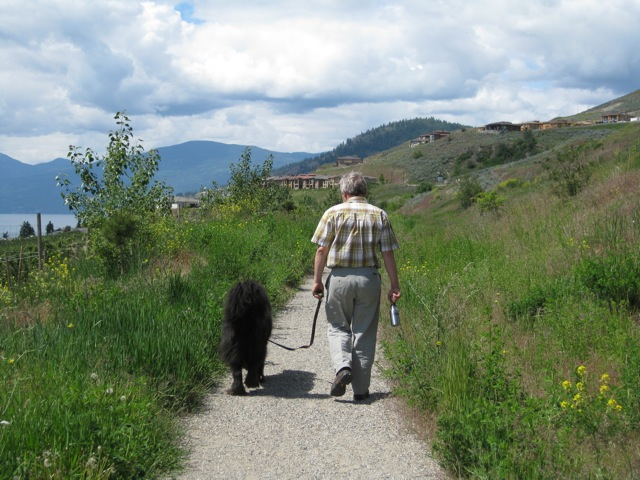
Two Friends, Walking

Peace.

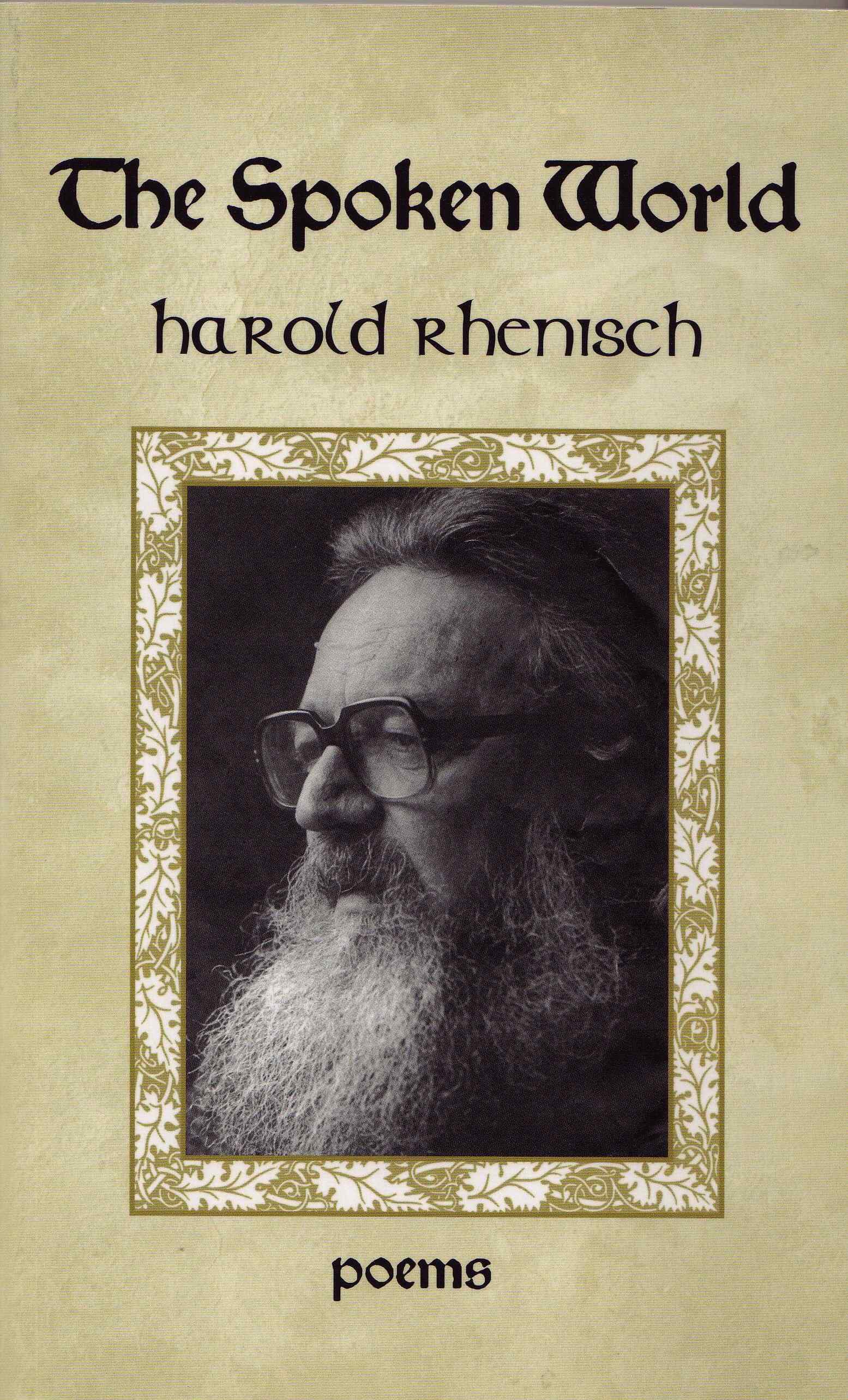
The Spoken World

I have been blessed with a new book of poems. Once in every poet’s life, a special book comes that is a pure gift. This is that book. In October, five years after my friend, the poet Robin Skelton died, Robin came to me and we talked through the medium of these poems. I then spent nine years making sure they were right. They are pure music. Here’s Hagios Press’s info on the book. I’ll be taking the book around this January. I hope to see you along the way. A list of readings follows. First the book:


Robin Skelton Sharing the Cover of Our Book
We’ll be going out reading in January. Come and share the magic.

These are poems created out of the Old Norse and Anglo Saxon traditions of blessings, prayers, poems of love and death, and earth-consciousness that are at the root of our language. Here’s where you can find me with the book this month:

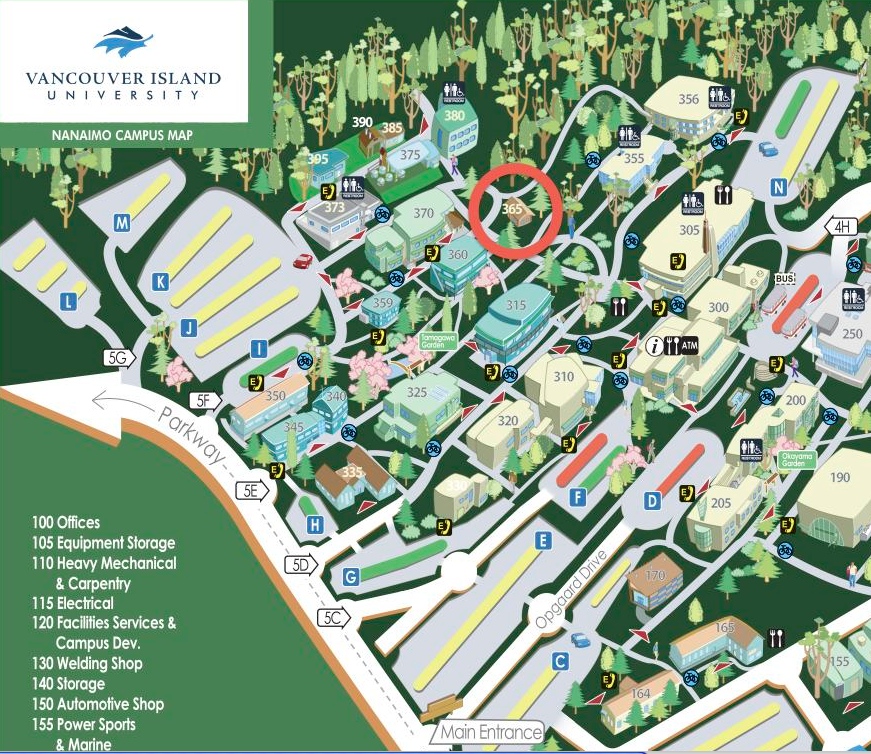
January 19, 2012, Nanaimo. Vancouver Island University, Building 365 (“The Cabin”), 7 pm, with Robert Pepper-Smith. Full details here. Here’s a map, to help you find the cabin:

Upper Vancouver Island University

With the Cabin circled in red. Just uphill from the library. Just in from the Upper Parking Lot off of the Nanaimo Parkway. 

January 20, 2012. Victoria. Planet Earth Poetry Series. 7:30 p.m. Moka House, #103 1633 Hillside Avenue. With Nick Thran.

January 21, 2012. Quadra Island. Herriot Bay Inn. Herriot Bay Dinner Series. 7 PM, $15, includes tasty savoury & sweet morsels, 250.285.3322 for reservations and information. I will be combining the book with stories of the amazing salmon of the Okanagan River, who swim to Siberia and back. There’s is a truly inspiring story. If you know the Herriot Bay Inn, you know these evenings are true expressions of spirit unlike anything else in B.C. If you don’t, do come, and then, once we’ve eaten like kings and queens and have celebrated the magic of words, we can retire to the pub, where the jam sessions can put any LA studio session to shame. This is B.C.’s best-kept secret. It shouldn’t be a secret! Just follow the signs to the Cortez Ferry, and turn left just before the loading dock, and you’ll be there.

January 22, Campbell River.Noon to 4 pm. Writing Workshop: English – Language of the Earth. Sybill Andrews Cottage. 2131 South Island Highway. To register, please call: 250-923-0213. $40  English is a language built on old knowledge of the earth brought to us by our Old Norse ancestors. All of our language for our physical lives is a gift from them: man, woman, star, wood, water, ice, fire, love, birth, death, grass, rain, and all the other things we can pick up and hold and which hold us in turn. By moving into this language, we can make all of our writing come alive in the way the earth is alive, and it is in this language that we both describe the world and speak of love, spirit, magic, prayer, and our dreams. Whether you are chanelling, writing prayers, novels, meditations, memoirs, stories, poems, or blessings, or in any way speaking for your body within your words, you will find many new avenues for writing within this hands-on workshop.

January 24, Campbell River. An Evening With Harold Rhenisch. 7-9 p.m. Sybill Andrews Cottage. 2131 South Island Highway. For information, please call: 250-923-0213. I will be combining talk about my latest forays into complementing and extending the writings and environmental concerns of Roderick Haig-Brown, with readings from The Spoken World, and other new works. I will augment the show with slides from the Broughton Archipelago and Iceland. There is much in our ancient language that can help us in these troubled times, in which we all have become increasingly aware of the earth speaking through us, and of the need to find terms with which to speak for it and to save it. $6.

And, of course, Robin will come:

Robin in One of His Frequent, Playful Moments

Oak Bay, Early 1980s.

If you want to hear these poems somewhere else, or want to have coffee along the way, drop me a line at rhenisch at telus dot net.

Blessings.

Where Mountains Flow into the Sea

In some countries, it’s the other way around, but in Iceland it’s the mountains that are on the move. The sea is absolutely still.

Of course, on other days it breaks over the rocks with a vengeance, trying to wash the island away. So far, it has failed, but the sacred dance continues. I have brought it home. I  left Canada, convinced that it was no longer possible to write a memoir using the character “I”. I return with the literature of the earth, and with these trolls and ogres, dwarves and elves. More on that in the days to come.

Trolls!

The Origins of Art?

I have spoken many times about seeing faces in the rocks. It fascinates me. One of my current projects is an illustrated journey through the human faces in rocks from British Columbia’s Thompson Gorge, the Broughton Archipelago on the Mid-BC Coast, the northern tip of Vancouver Island, the Black Forest, the Okanagan Valley, the Columbia Basin, the Nazko, and Iceland. Here are some pictures from the European part of this project.

First, the possibly Celtic formation at Siebenfelsen above Yach (pronounce Eich) in the Black Forest. Here’s the skull at the base of the phallus:

Yes, there’s a vagina right next door. Yes, it’s giving birth. Yes, there’s a navel farther up the hill, with a wild boar. Take a look at what’s below the phallus/vagina tumulus, though:

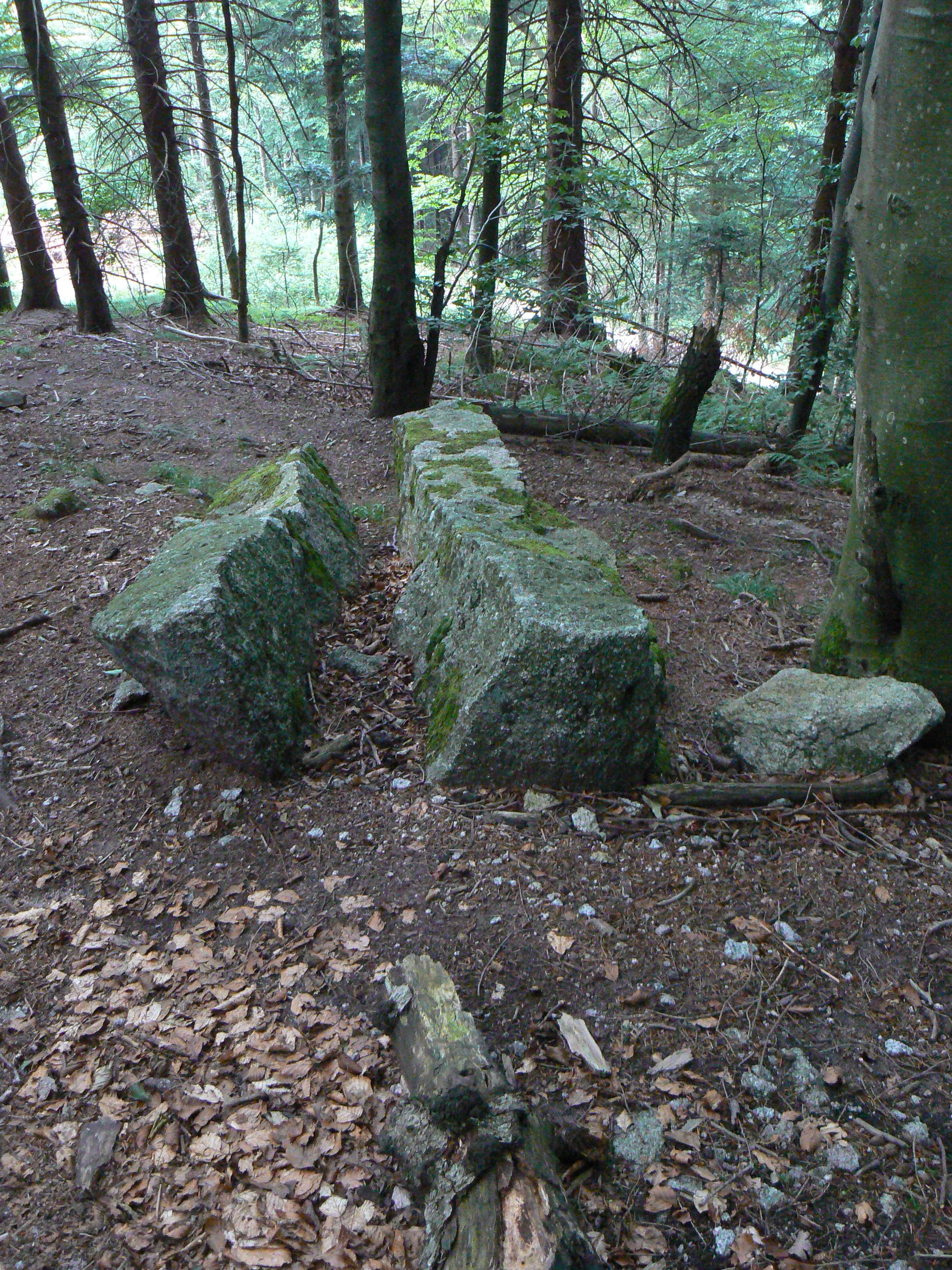
That’s how it was done. Chips were taken out of the stone along a line. Then the stones were split. The hillside below the monument is littered with humanly-altered rocks like this. Presumably, the monument was carved, much like a Canadian Inukshuk. Now, take a look at this:

Crikes. What is that, anyway? A bear? A dog? A lion? I snapped this shot as I was leaving. A big storm was pouring over the hill. I only noticed the head when I got the picture home to Canada. The site also boasts serpents and horses.

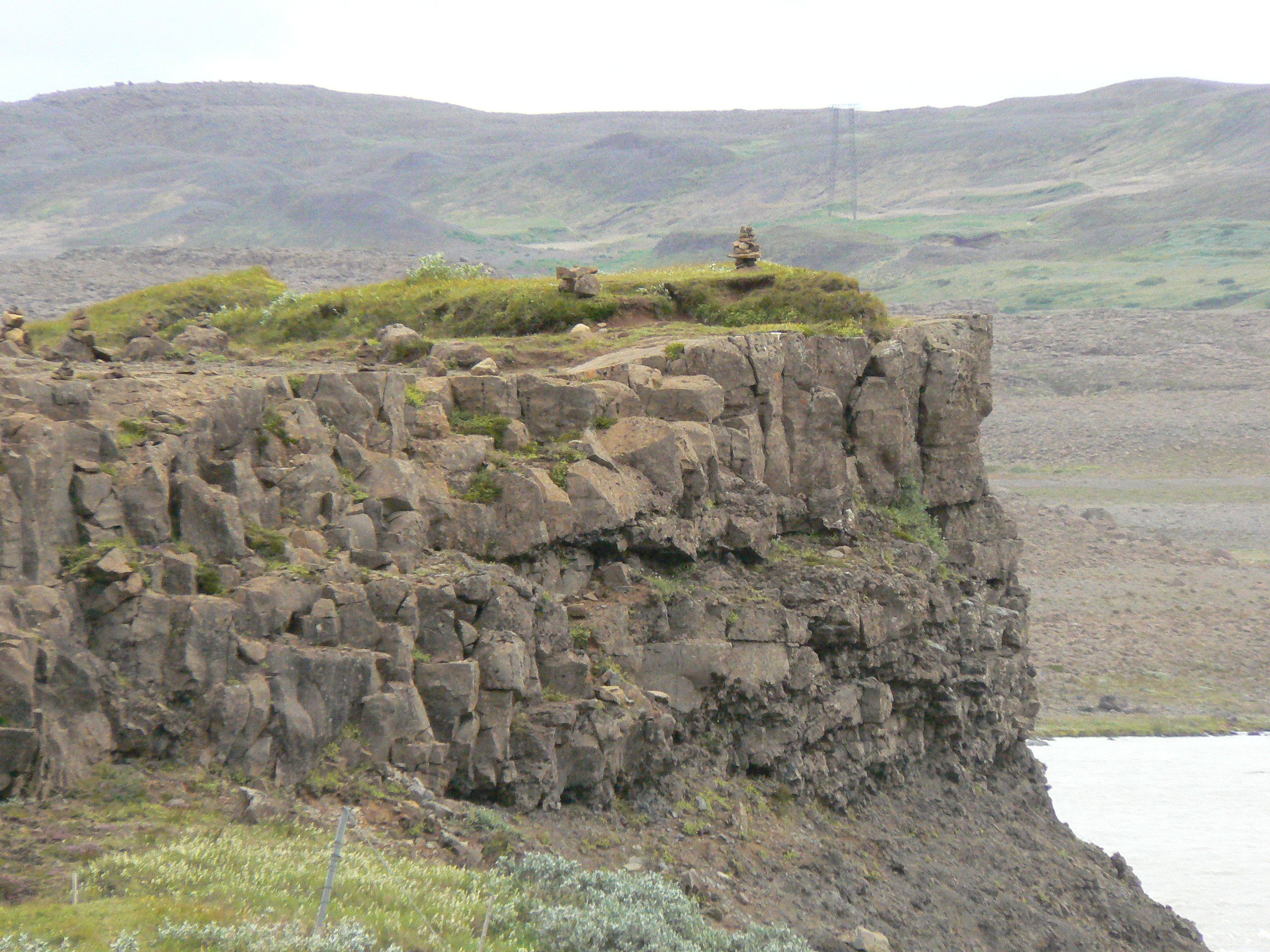
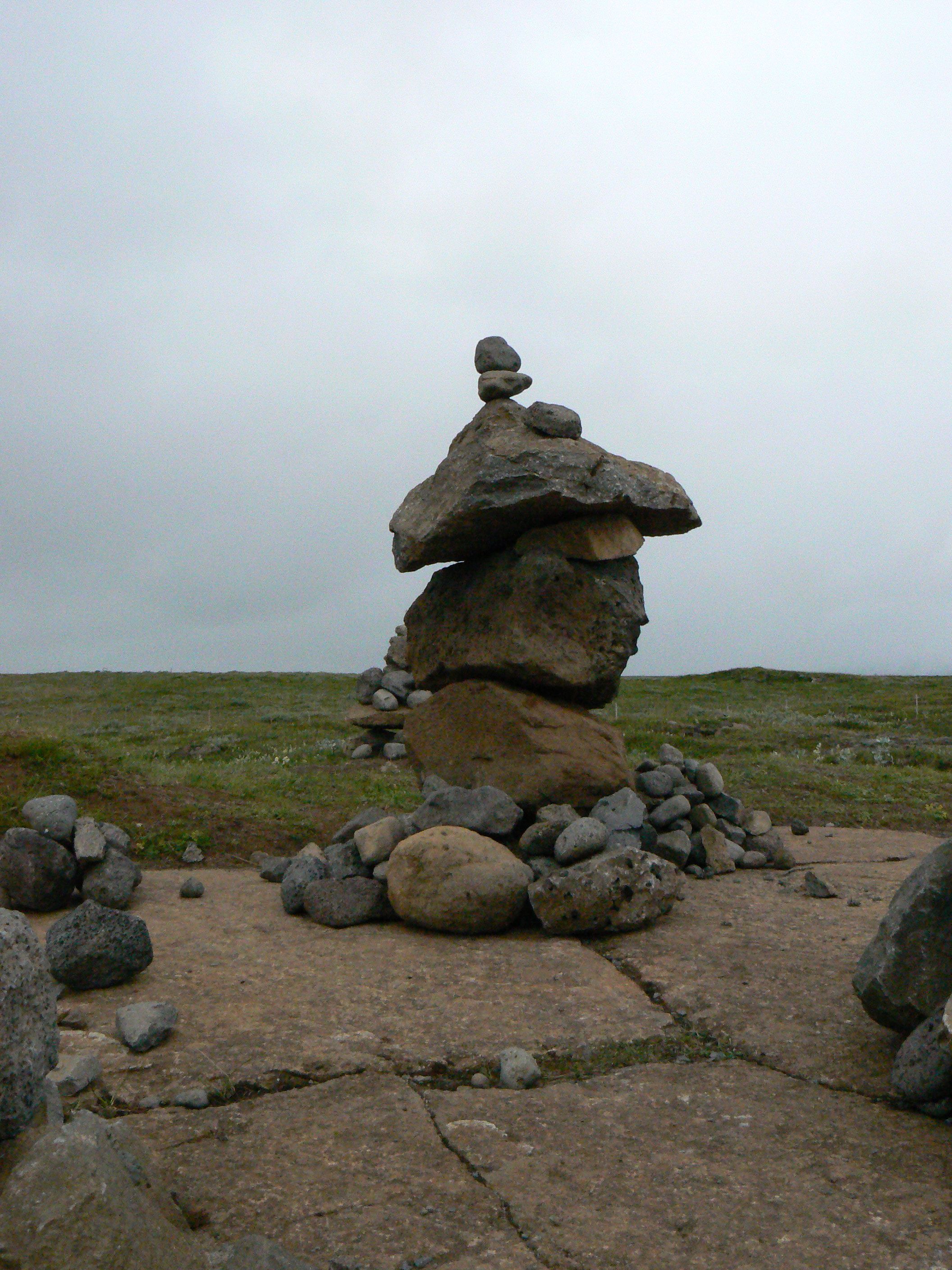
But it wasn’t just the Celts. Let’s go to Iceland. First a troll in a cliff. The cliffs here (and in many other places) contain a lot of Troll faces. This is not the strongest, but it’s cool because it has a little hand-made troll on his head. It seems that humans can’t avoid making self portraits.

And here we are closer, just a hundred metres from the cliff edge:

See what I mean? Closer yet:

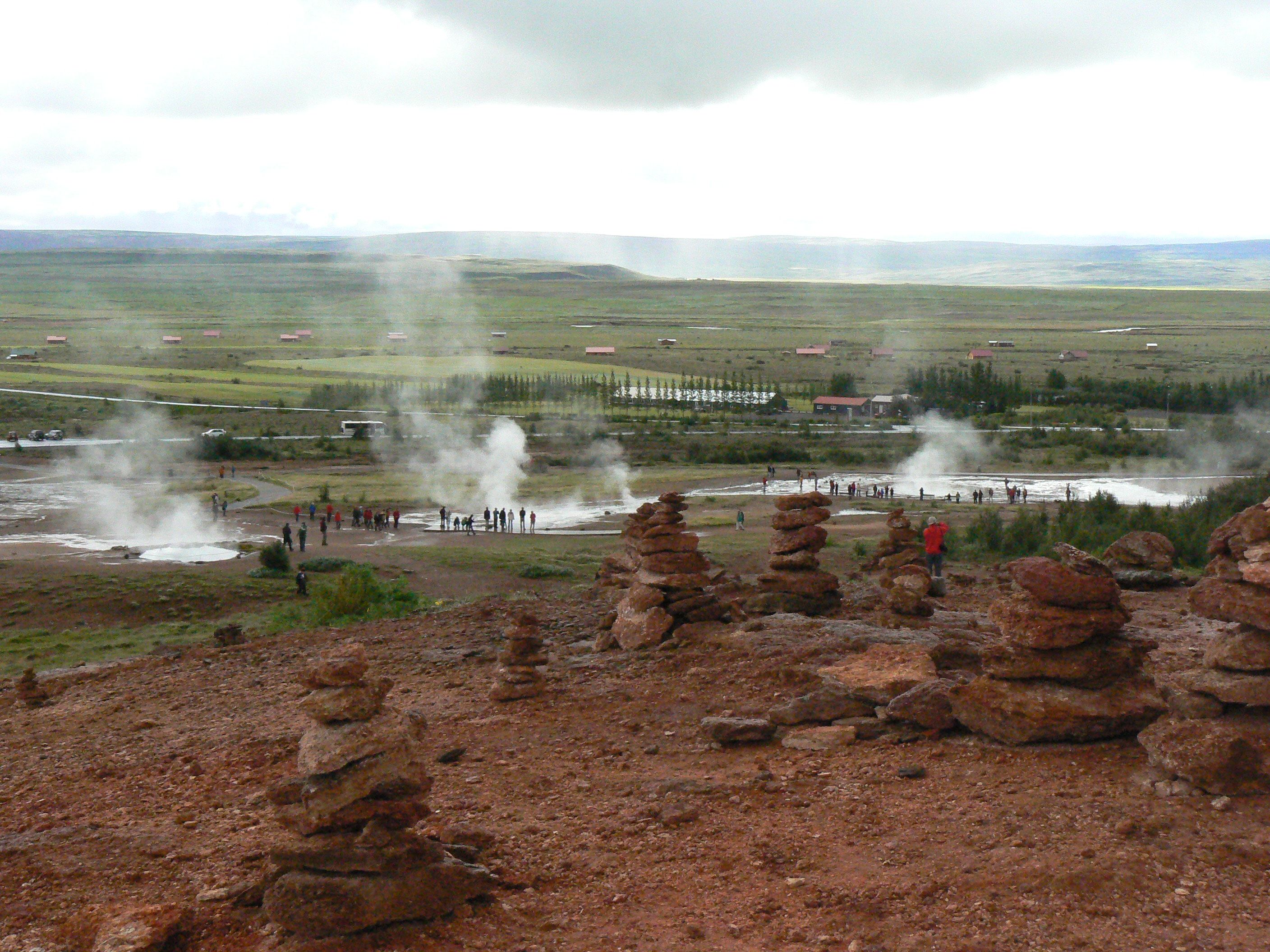
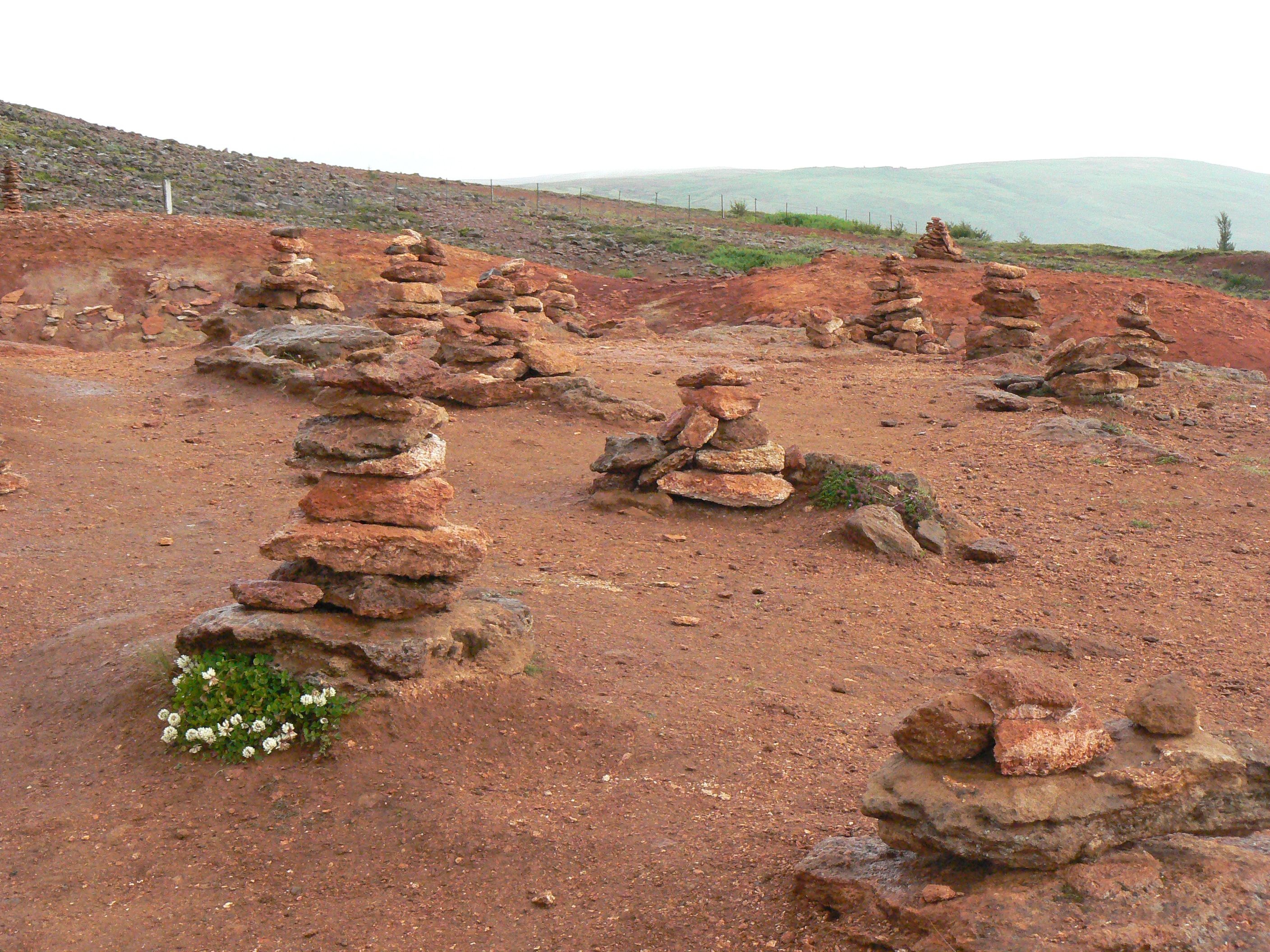
But don’t think it’s all about getting cozy with the trolls. Here we are at the geysir Geysir at Geysir. Well, actually, just uphill. Warning: that red dirt sticks to your boots and you will spend a half hour scraping it out with a stick and hopping around in mud puddles. Good to know.

It’s enough to make one feel like one is being watched. A little closer:

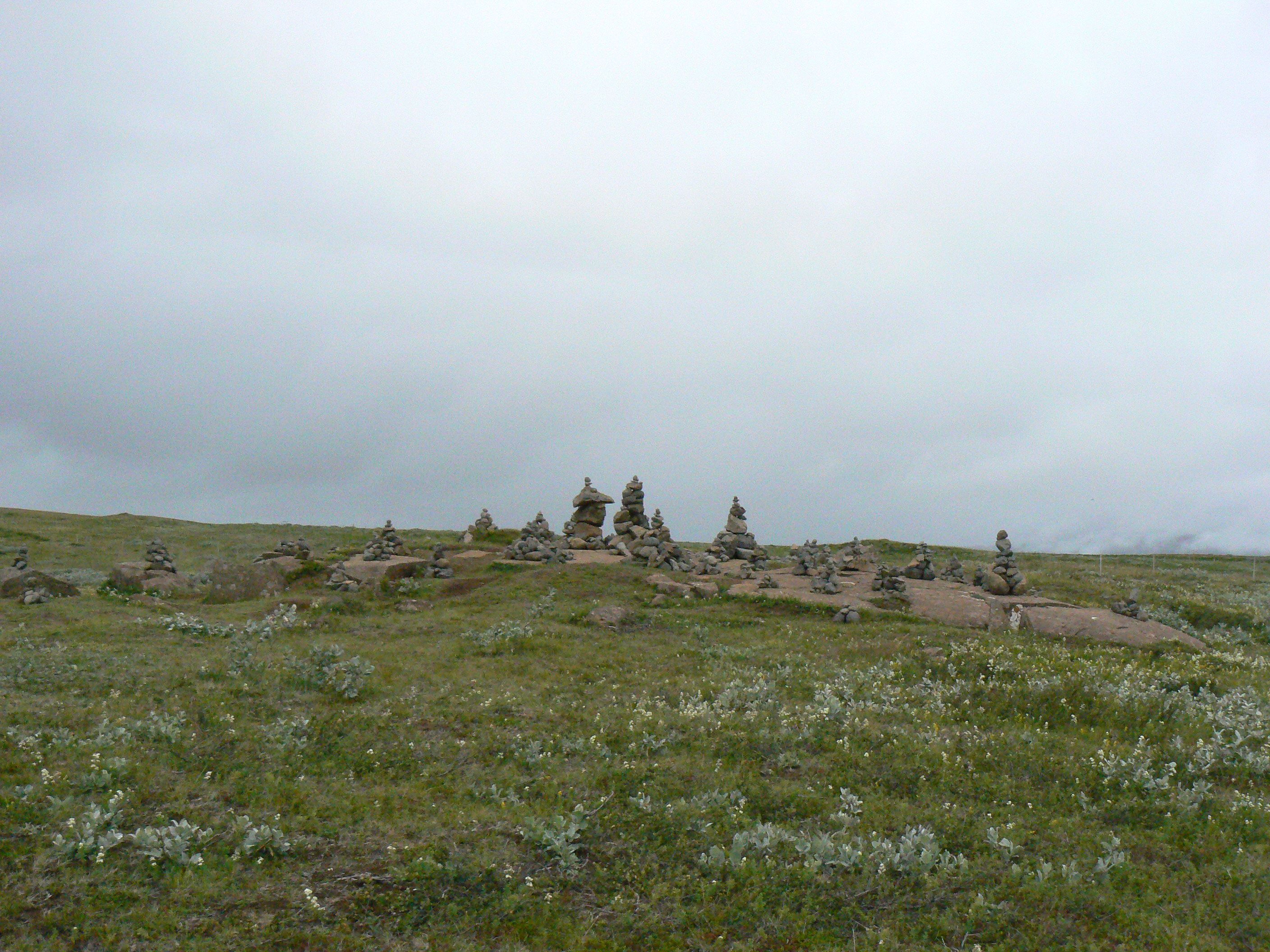
Did art start like this? If so, I think it’s watching us. Virtual reality didn’t start with computers or SFX laboratories, at any rate. Aren’t humans beautiful and curious mammals? A dozen rocks on top of each other, and there you have it. You.

It’s magic.

Crossing the Line

Two years ago I crossed the iron curtain from west to east, on the old Salt Road. Two weeks ago I crossed back. The political spray paint art has been painted over now, and the concrete border posts have been taken away and, no doubt, smashed up into road gravel. For an hour I wandered in the sun and the grass with the birds and the grasshopper nymphs, marveling that all that division led, in the end, only to what had been there before it began. I ate wild cherries from a tree growing along the East German guard path, and left the last tiny chunks of concrete to the ants, who were getting a bit of heat from them. For a souvenir, I bring you this found moment: two kinds of East German energy — old and new.

East Meets West at Point Alpha

And this time I found my way home. I have become a Trabant, with an Ossie in my head with both hands on the wheel, and the car puffing blue smoke like, well, not like Brecht’s cigar maybe, but at least like a Pall Mall, eh.

Puff.

I feel like John Le Carré.